
Steven Spielberg’s “The Post” opens with an unforgivably cliché Vietnam war scene. Creedence Clearwater Revival plays in the background as men charge through a forest dodging gunfire: cheap special effects made with flashing lights. If you walk in the theater a couple minutes late, you can skip this and get straight to the point.
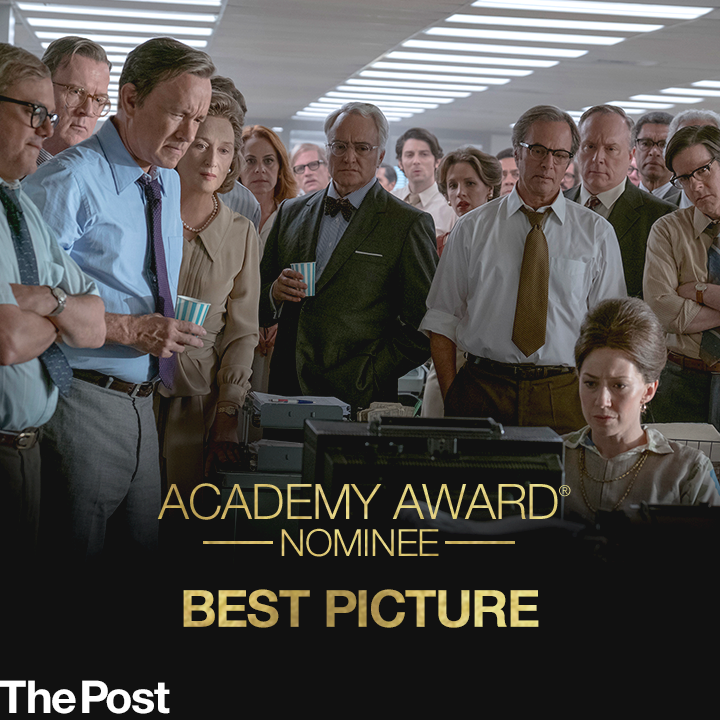
This movie, nominated for a Best Picture Oscar, attempts to tell the story of a watershed moment in the history of American journalism. Daniel Ellsberg, played by Matthew Rhys, leaked the Pentagon Papers in 1971 after compiling the 7,000-page file for Defense Secretary Robert McNamara. The leak revealed the government had been concealing its motives and increased involvement in the Vietnam war through multiple presidencies.
As a work of fiction, “The Post” is an enjoyable film that’s easy to nitpick. If “All the President’s Men” is “Star Wars,” then “The Post” is “Rogue One.” The problem is this film claims to be a true story when a brief internet search reveals most of its drama is manufactured or taken out of context.
“The Post” sets up Nixon as the antagonist and the Washington Post as the hero of the Pentagon Papers story. Audio recordings of Nixon cursing out reporters and barring them from the White House play throughout the film. These are compelling, and even hilarious at times, but their true context is rooted in the Watergate scandal, the subject of the classic “All the President’s Men.” Before Watergate, Nixon had no problem with the press. “The Post” leads audiences to believe he was banning reporters and cursing their existence before the Pentagon Papers even leaked.
It would seem “The Post” pulls most of its drama from pure fiction or events surrounding the subsequent Watergate scandal. From a historical perspective, the film is ridiculous. Nixon, while upset at the leak, was not a key figure in expanding the Vietnam war. In short, the film celebrates a runner-up publication because it would later become the key player in the Watergate discovery.
The characters are where the film earns most of its praise. Meryl Streep’s Katharine Graham, the owner of the Washington Post, and Tom Hank’s Ben Bradlee, its editor-in-chief, are decent leads. Streep’s performance seems more natural in the later scenes and Hanks is fun except for the occasional moment when he preaches about journalism to the audience. The appearance of Bob Odenkirk’s reporter Ben Bagdikian opposite Jesse Plemons’ lawyer Roger Clark will even please fans of “Breaking Bad.”
Along with historical revisions, the film is sometimes anything but subtle about Graham’s struggles as a woman in business. Two scenes show entirely different ways of handling this issue. In one, Graham attempts to answer questions at a meeting only to have men talk over her, giving the same answers their female colleague already said. On the other hand, Graham walking out of a building in slow motion to a crowd made up exclusively of women is a bit egregious.
Bradley Whitford plays Washington Post board member Arthur Parsons, who voices concerns about having a woman in charge. While this may strike audience members as a harsh reminder of the adversity Graham faced, it turns out Parsons never existed in real life, but is a composite character of many possible dissenters at the Washington Post. His character is intentionally annoying, lacking any subtlety one would expect from a historical film.
The subplot of Graham’s struggle to maintain her late husband’s paper is a great story, but the film oversteps a few times with its portrayal. It is true that Graham did not have everyone on her side. Her company was about to be taken public with the help of cautious investors, and she hadn’t expected to oversee the Washington Post in this stressful time. Nevertheless, the film’s portrayal of her struggle to publish the Pentagon Papers is made to seem much more conflicted than it really was. Instead of agonizing over the choices and crying in her room, the real Graham claimed she didn’t have doubts until the night before. The film makes her seem more conflicted and indecisive than she really was.
Of course, many of these changes were made for dramatic effect. With the spinning camera shots of people talking on phones, and plenty of close-ups of lips and landlines, it’s clear Spielberg thought the story needed to be more exciting. Perhaps he should have just remade “All the President’s Men” with the New York Times as the star instead. After all, the last scenes in the movie are a shot-for-shot remake of the older film’s opening.
A guard finds tape over a door jamb, the scene cuts to a shot of a hotel, and we hear on a radio that someone may have broken into the Watergate. As exciting as “The Post” is, it simply leaves the audience wanting to watch “All the President’s Men” instead.
