
Moshav Netiv Ha’asara, Israel — When it comes to the closest Israeli town to the Gaza Strip, a town hit with many rockets, the last thing a person would expect to see is hope.
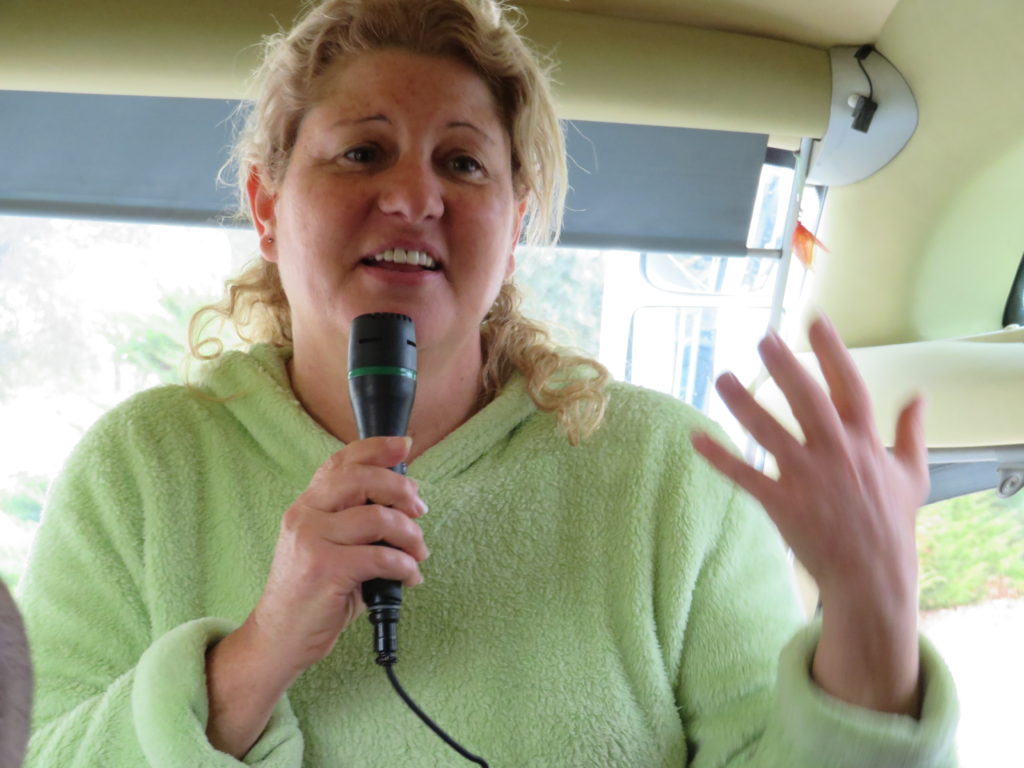
But that’s what Tsameret Zamir — a 16-year resident of the moshav, an agricultural collective in which people own private property — said she sees in her hometown, where three people have been killed by attacks from Hamas in Gaza, Palestinian territory in southwestern Israel overrun by the terrorist organization.
“We’re the closest town, but it doesn’t feel like it anymore,” Zamir said. “We don’t live in fear.”
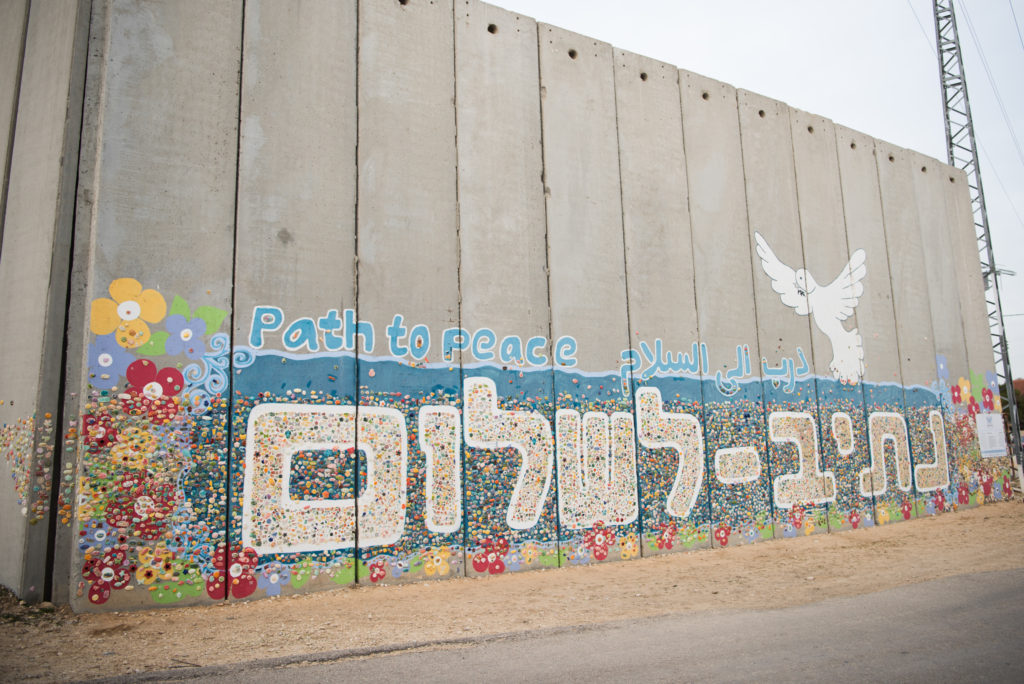
That partially comes from the message of peace Zamir said she is trying to spread with her Nivet Wall mural project, in which she invites community members and visitors to glue small ceramic shapes onto three murals she painted on the walls hiding the moshav’s homes, which sit as close as 33 yards to the border, from Gaza.
A group of 43 students and two professors from Hillsdale College visited Zamir Jan. 5 at her home pottery studio as part of their 10-day trip to Israel through Passages, a program of the Philos Project and Museum of the Bible Foundation that sends Christian students to encounter the Holy Land and learn about Israel’s geo-political situation. The group heard from Zamir about living in the moshav, and the participants glued ceramic pieces of their own onto the wall.
“In the moshav, there’s beautiful gardens and homes,” said junior Hannah Brewer, who helped lead the Hillsdale group as a Passages fellow on her second trip to the Holy Land. “It’s a weird juxtaposition, being so close to something so sad. It makes the beauty of the moshav more beautiful.”
Zamir, who grew up in another agricultural community not far from the moshav, said the town is her home and she wants to see her neighborhood’s children move into the collective, as they have in the past, despite the threats. Many near the Gaza border, however, do not have a choice to leave, because property values have diminished from the attacks.
Zamir recalled a time when she sent her four young children to the school bus stop. In her kitchen, she heard the warning sound signaling a rocket attack. She didn’t run to the bomb shelter in her home. She ran outside toward the bus where dozens of children were crying and screaming at the sound of an explosion not far.
Although traumatized herself, Zamir said she knew she had to remain brave for the children: “I don’t know where it came from, but this voice came out of me, saying to the kids, ‘Calm down. Relax. It’s OK. It’s over. It’s time to go to school.’”
But with each attack, Zamir said, it is always a surprise — she and her neighbors never get used to them.
That showed when a larger projectile hit her neighbor’s home, demolishing the second floor of the home. Although no one was in the house, Zamir said it scared her and her husband.
They traveled north to Tel Aviv to stay with family, but Zamir lost her voice for a week from fear following the attack.
“It was hard to have my children see me like that,” Zamir said. “I try to be so strong for them.”
The family returned shortly afterward to the rural and typically quiet moshav.
“It took weeks for me to open the door and stand in my garden that I love again,” Zamir said.
Nevertheless, many Hillsdale students said they were in awe of Zamir’s bravery.
“I was weeping,” junior Emily Rinaldi said. “I don’t think I would have stayed. She seems so happy and knows what’s best for her family. She’s so strong.”
Zamir said she has turned to her pottery, making bowls, dishes, and other creations to sell to visitors of the gated community.
“Creating the flowers and butterflies, it feels like healing,” she said.
Five years ago, she began painting murals on the walls separating the moshav from Gaza. Her first depicts a dove with the words “Path to Peace” written in Arabic, English, and Hebrew. It faces Israel. Another mural has bright colors in shapes of trees, flowers, houses, and more. The word for peace in Arabic, salaam, is also found there, facing toward a town in Gaza that is visible.
“I don’t like violence,” Zamir said. “I don’t like hate, war. I just want peace.”
It was the strength Zamir said she saw in her community that inspired her to start the project.
“The wall was gray and very dark and scary, and I wanted to vanish that atmosphere of fear and create one of joy and hope, which we have in our hearts and which helps us to pull through in the hardest times, overcome obstacles and give our children a warm and happy environment,” Zamir said.
Since then, hundreds have visited the moshav, picked a small ceramic shard that Zamir has painted with bright colors and made into animals and other shapes, and stuck the pieces to the wall.
“I thought it was unreal,” sophomore Sammy Roberts said. “I’m playing with dogs with two Israeli Defense Forces soldiers in between the walls of Gaza with a mural painted on one. The conflict will come, but it’ll be that hope that rebuilds that community.”
That’s what Zamir said is her goal: “We love our homes. I want to bring back the happiness to this place.”
