
Brightly colored fruits and vegetables sit temptingly close to the edges of cart shelves; shawls and dresses flutter in the breeze; vendors yell out their wares and argue over prices; spices and roasting meat permeate the air with mouth-watering scents. This is the Carmel Market in Tel Aviv, an overwhelming feast for the senses nestled among quiet residential streets. It’s crowded here on this narrow street, but vibrantly so—the market is a spectrum of life, of creation.
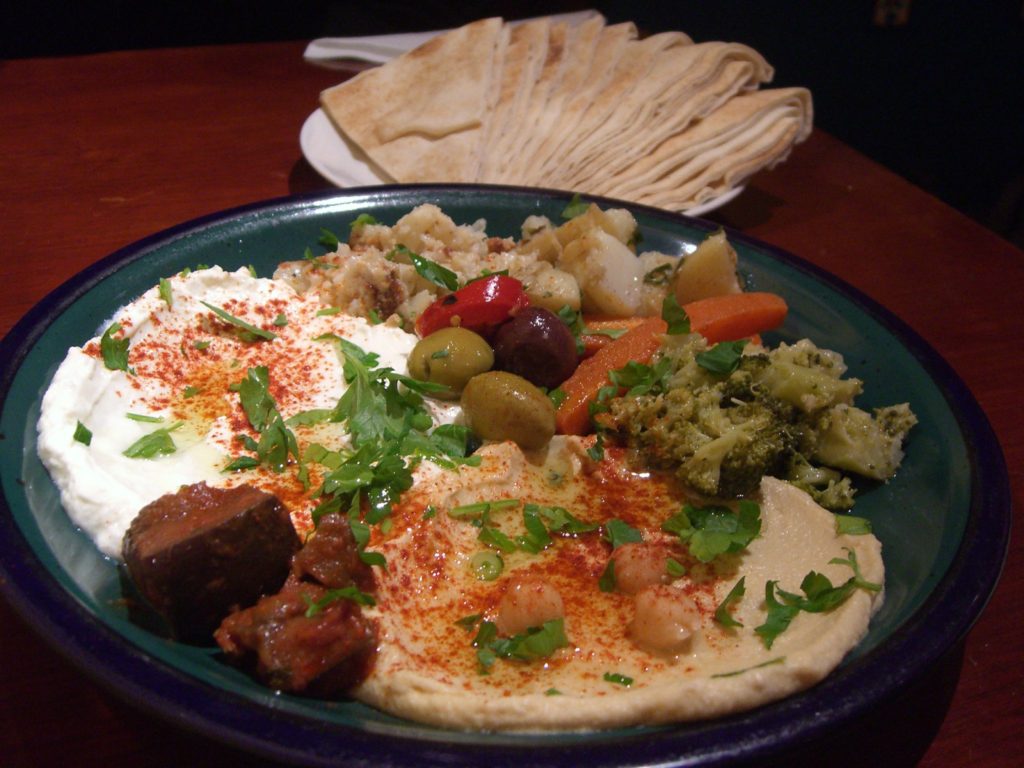
Originally a neighborhood market that opened in the early 1920s, Shuk HaCarmel, as it is called in Hebrew, has become the largest shuk—or open-air market—in Tel Aviv. It’s mainly located along HaCarmel Street, about a half mile long, but it sprawls into nearby side-streets. Consisting of open-air or tented vendors as well as indoor shops, the market offers everything from clothing to coffee, kebabs to cakes. Cheap tourist trinkets clutter some market stalls, but there are plenty of locally-produced foods, wood carvings, and other crafted items to satisfy those seeking more authentic goods.
In a way, the market is a microcosm of Israel, whose survival and resilience is something of a miracle. In Israel and in HaCarmel, life goes on—thrives, even—under the shadow of death and terror. Only in a land of peace can people haggle over prices and make a living by stuffing pitas. Only people who do not fear death can busy themselves with the most ordinary activities of life, shopping and selling, cooking and creating.
For all its liveliness, the market is not immune to death. It was the site of sniper fire during the War of Independence in 1948 and a Palestinian suicide bombing in 2004. Its nation is surrounded by enemies, its city only miles from a terrorist regime in the Gaza Strip. But the bustle of ordinary life within it belies any fear or tragedy.
On display at HaCarmel is the best and worst of humanity: creativity and greed, friendliness and deceptiveness. Here a woman yells at us, trying to make us pay for more tea than we want to buy. Here an old man dances to music blasting from a younger man’s iPhone while bystanders clap hands to keep time. Shoppers push past each other, prodding at produce to test its freshness; stall-tenders laugh together, and one man shouts over the din to explain the brik—a fried egg pastry stuffed in pita—that he’s making for us.
We felt out of place, waiting in the narrow street in a line-turned-gaggle for the brik, because people do not wait in the Carmel Market. Life here isn’t patient. It swarms, pushing, yelling, smiling, eating. A woman squeezed by on her bike to test the cabbage lined up on the edge of the brik vendor’s cart. Another woman crowded up behind her, poking the cabbage with her cane and firing questions at the vendor in Hebrew. We awkwardly shifted about; there was really no place here for bystanders, for people not moving. Even the man behind the cart was in perpetual motion, frying dough, grabbing pita, stuffing it, serving it, starting again. He was here last year, a friend said; maybe he’d been doing this every day for years. This was his life. For a few minutes, we were caught with nothing to do but observe people living.
And if anything, this is living, here at the market. Beautiful and ugly, there is life here displayed in its fullness, defying anyone who dares to threaten it. This is a miracle.
