
The Washington-Hillsdale Internship Program is welcoming 27 students to Washington, D.C., this spring, the largest class the program has ever had.
Participation has nearly doubled since spring 2016 because of administrative efforts to make the program more accessible to students not majoring in politics, Assistant Director of Career Services Sophia Carr said.
The program used to offer two politics classes and require participation in a specifically political internship, Carr said. In the last three years, however, the college has redesigned the requirements to meet the needs of students in other fields by expanding its course offerings and allowing internships at non-political organizations.
“The main complaint we get is that kids can’t make it out here without missing a core requirement,” WHIP Program Associate Bert Hasler said.
The program’s expanded course schedule addresses that problem by offering six classes from diverse fields, including history, English, politics, and economics. Students with different majors can now continue fulfilling their major requirements in Washington, D.C., and gain internship experience that is more directly related to their field.
“We have some marketing management students, a lot of English majors, and then a smattering of art majors, French majors, really anything on the humanities side,” Carr said. “If you plan well enough, you should be able to do a semester in D.C.”
History major senior Drew Jenkins will be on WHIP this spring, but he still needs to take an upper-level English class to graduate in May, he said.
“It’s only because they’re offering that English class that I’m able to go,” he said. “I was looking for a way to either graduate early or get an internship, and WHIP was the perfect way to do it because it had my last English class that I needed. I could get a professional internship that would help me get jobs next year.”
Almost all WHIP students were politics majors three years ago, but that demographic is changing, Carr said.
“Now, it’s maybe a quarter to a third of the students that are studying politics,” she said. “The program is never going to be not political because you’re in Washington, D.C., so you’re going to be surrounded by government on all sides, but there are museums in D.C., there’s the Smithsonian Institution, there’s the National Portrait Gallery, there are all these opportunities that have internships that aren’t working on Capitol Hill or working at a think tank.”
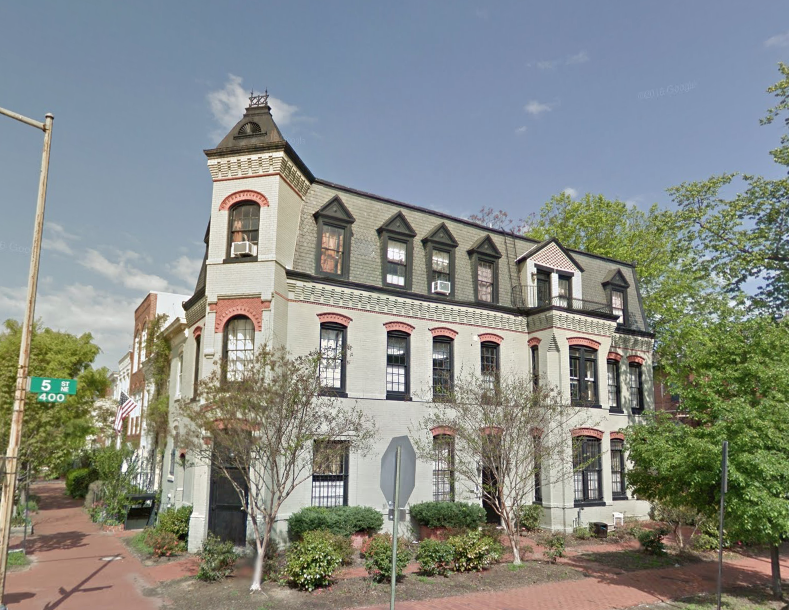
The expansion of the program, however, does create some housing challenges. The Hillsdale House, a D.C. rowhouse near Capitol Hill in which WHIP students usually live, can only accommodate 17 residents. Ten students will live at The Heritage Foundation this spring, two blocks away from the house and across the street from the Allan P. Kirby Jr. Center for Constitutional Studies and Citizenship, Hasler said.
“In a perfect world, we want every student who’s qualified to be able to come on WHIP,” he said. “But this semester, we’re operating at maximum capacity.”
WHIP has never turned a student away because of space constraints, he said, and the program would gladly take more than 27 in the future. It will need to be capped eventually, unless the college can obtain additional student housing in the area, Hasler said.
At this time, the college isn’t looking to expand housing in the capital for the larger groups of WHIP students, Chief Administrative Officer Richard Péwé said.
“It is a great problem to have,” he said.
