
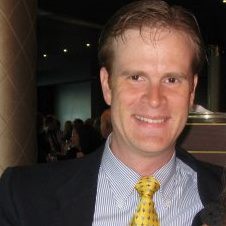
“I find people interesting as a species,” Cregeau thought, “so let’s try that.”
To do that, Cregeau studied history at Hillsdale College, and now works as an independent historian, focusing on Early American, Colonial, and military history, especially in his home state and the surrounding areas.
Cregeau is vice president of the Connecticut Society of the Sons of the American Revolution (CTSSAR), a non-profit state society which seeks to educate the public on American history.
“Our mission is to educate the public about how we became independent as a country, the era of the Revolution and our Founding Fathers,” Cregeau said.
Cregeau transferred to Hillsdale College in ’94 as a sophomore and studied history with a minor in political science. Many activities at Hillsdale shaped him, Cregeau said, such as interning with WCSR Radio, studying a semester in Oxford, and working for the Collegian. Favorite topics of the past features editor focus on baseball, rock n’ roll, history, and any combination of the three: “‘Schindler’s List’: A Powerful History Lesson,” “The Zeppelin Keeps Aloft,”and “New Ballparks Need History.”
Among the experiences, Cregeau said that he remembers fondly history classes with Professors of History Tom Conner and David Stewart.
Stewart said that Cregeau, even at Hillsdale, was interested in preserving history in small towns while also allowing for growth. Cregeau took Stewart’s class on European Military History and was interested in military history in other classes as well.
“As a student he was very enthusiastic,” Stewart said. “He was one of those guys who always wanted to know more.”
Conner said that Cregeau’s position is not a typical career path among Hillsdale history majors.
“That is one of the things that people can do with a history major,” he said. “It is one of the ways to pursue a lifelong interest in history. His interest is very strong at the local level.”
After graduation, Cregeau attained his master’s degree in history at Colorado State University. He worked as a draftsman and office manager for Cregeau Associates, Architects and Engineers for a number of years, and also taught history at two preparatory schools until 2007, when he “caught the bug” and became an independent historian.
“History tells a good story,” he said. “There are a lot of different facets you can look at and investigate, hordes of books and documents. I’ve been able to do that. I’ve been able to get my fingers on historic documents.”
Among that research, Cregeau has spoken about and is interested in the spy rings of the American Revolution, such as the Culper Spy Ring. As part of his work with the CTSSAR, Cregeau also helps manage historic properties that are also museums, two of which were used as schoolhouses by Connecticut state hero Nathan Hale, who was hanged in 1776 for his service as a spy for the Continental Army.
Cregeau also said that the Culper Spy Ring was active close to his childhood home in Fairfield, Connecticut.
“One of the couriers involved in the spy ring is buried in the cemetery where I used to play in as a kid,” he said. “It’s a link between past and present.”
Cregeau has given various talks about spies, colonial architecture, life as a foot soldier, and other topics about Colonial America and the Revolutionary War. He said that his most memorable talk was given to the Federal Bureau of Investigation at the New York office.
“It was great to talk to people who spy professionally now about what it was like to spy professionally back then in the same area,” he said.
Cregeau has also served as the narrator for the Benedict Arnold Trail in Connecticut, and he will be the keynote speaker for the Norwich Historical Society Annual Meeting. He said that it is important for everyone to know about and remember history.
“It’s important to keep history alive because history does indeed repeat itself,” Cregeau said. “You can pick up pat- terns in human behavior. If you’re a gregarious people- person like me, you want to share that enthusiasm.”
