
Jan. 30, 1945: Thousands of refugees huddle in a repurposed German luxury liner, desperate to escape the death throes of the Nazi regime. Aboard the Wilhelm Gustloff, the decks are crowded, the night is dark, and the silence is haunting.
And then a sound tears through the ship, signalling the beginning of the end:
Bang.
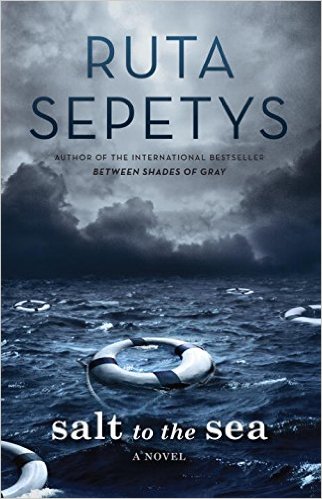
In “Salt to the Sea,” the third novel of Hillsdale College alumna Ruta Sepetys ’90, Sepetys establishes herself as a force in historical fiction, expanding her voice and artistic range in an elegiac work that gives voice to the unheard victims of the greatest maritime tragedy in history: the sinking of the Wilhelm Gustloff late in World War II.
Readers of young adult fiction may remember Sepetys from her New York Times best-selling novel “Between Shades of Gray,” a story that challenged teens and adults alike with its unflinching portrayal of Soviet labor camps.
Echoes of Sepetys’ 2011 debut novel run through “Salt to the Sea”: Joana, one of the main characters, is a cousin of Lina, the protagonist in “Between Shades of Gray.” The family tie between the cousins adds scope and resonance for readers as they read of guilt and grief in families torn by the war.
In her most recent work of “hidden history,” as she calls it, Sepetys weaves together the fictional voices of four young refugees from countries across Eastern Europe as their flights from the Nazis converge upon the Wilhelm Gustloff, a ship whose fate cost over 9,000 World War II refugees their lives.
Salt to the Sea” excels. Anecdotes drawn directly from interviews with survivors throughout Sepetys’ three years of research lend to the horror of the maritime tragedy. Sepetys is not exaggerating when she writes of mothers tossing their babies overboard in hopes of reaching a lifeboat.
But what truly brings “Salt to the Sea” to life is not the accuracy of the historical facts, but the powerful voices of the fictional characters that humanize it.
The four narrators, on the run for their lives, punctuate their escape attempts in rapid-fire chapters marked by a foreboding refrain: “Guilt is a hunter. Fate is a hunter.”
Then it’s “shame,” and later, “fear.”
This artful echo marks Sepetys’ growth as a writer. Though her first novel gave Sepetys a reputation for forcing readers to examine the injustice of victims’ suffering, Sepetys makes these daunting questions more poignant in this book through the stark poetry of the dark narratives she weaves together.
And though readers connected with the struggles of the characters in “Between Shades of Gray,” those voices never sang like the personalities in “Salt to the Sea.”
If anything, Sepetys’ characters are too individualized, straying toward caricature as each character fulfills a distinct purpose in the novel. Emilia, a young Polish mother, is the source of most of the novel’s symbolism, and Alfred, a German soldier, serves as a vehicle for Nazi political ideology and inhumanity, a means by which Sepetys conveys much of the novel’s painful historical background.
However, Sepetys does not let her readers off easily. She refuses to place blame on any one person or party. Instead, Sepetys’ depiction of evil is largely abstract. As a Prussian soldier asks late in the novel, “How do you defend yourself against . . . knowing you will surrender to the sea?”
For Sepetys and the characters of “Salt to the Sea,” war darkens the whole world.
Yet this darkness is where the novel is most successful. Amid
attempts to give a voice to an untold tragedy, Sepetys allows her characters to founder in questions beyond their grasp.
In “Salt to the Sea,” evil remains unanswerable, but peace is still possible for those who find their way ashore. In the end, the narrators of “Salt to the Sea” find strength and hope in keeping alive the memories of those they have lost.
Sepetys described her reasons for reviving forgotten tragedies in much the same way.
“I found bottles that contained messages that were thrown overboard from some of these refugee ships, and that told me that these souls were desperate for someone, anyone, to know their story,” Sepetys said.
“Salt to the Sea” is a chilling dive into the reality of war. But in a novel that Kirkus Reviews called “heartbreaking, historical, and a little bit hopeful,” Sepetys’ eulogy offers a story of strength in suffering as the victims of the Wilhelm Gustloff finally come up for air.
