
She was a force of nature, built like a tank and utterly ageless.
“That isn’t what you want,” she informed Assistant Professor of Music Rene Clark, then a recent transplant to New York City in search of a ball of yarn for a repair project. Before the younger woman could respond, a set of needles were stuck into her hands.
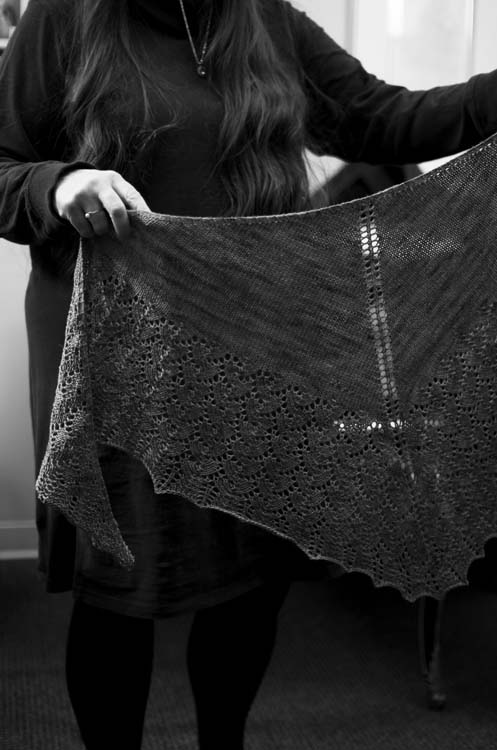
“And the next thing I knew, I was knitting,” Clark said, who has since become an avid and impressive knitter, recreating a Victorian lace shawl from the original pattern. The shawl took more than 600 hours to make.
“It’s a traditional craft and I’m all in favor,” said Professor of English John Somerville, who permitts students to knit during his classes, though few students have taken him up on the offer in recent years.
“Hillsdale is definitely an advocate of tradition and handicrafts, like knitting and spinning, are all part of that,” he said. “The clicking of knitting needles isn’t any more distracting than typing of a laptop, so I see no problem with it.”
Many students across campus engage in various traditional textile arts, ranging from sophomore Rachel Yerke, who just began knitting in October, to senior Becky Schoon, who began crocheting at the age of six.
The reasons why these various students began to knit vary, though most cite mothers or friends willing to teach them. Their reasons for continuing to knit, however, are largely the same: a love of the craft, and knitting’s relaxing quality that earned it the title of “the new yoga” in a New Jersey newspaper.
“I don’t knit things to be hung on a wall,” Clark said.
Instead, she knits items for friends and family as well as herself, also sending an annual box full of children’s and baby’s items to the Indian reservation where she spent a good deal of her childhood.
“There is just something really fundamental about making something to keep a baby warm,” said juniorAlexandra Allen, whose first major knitting project was a baby blanket for her goddaughter.
“It’s really satisfying to make something that someone wears. It’s one of my favorite things,” she said.
“It’s crafting something,” Yerke said. “You didn’t just go out and buy it.”
The ability to directly impact someone’s personal comfort along with creating something beautiful is one of the most unique aspects of knitting, Allen said.
“It’s very human, a product of skill and work, and a type of everyday beauty that is very important,” she said.
Last year, a group of Hillsdale students formed a club named “Sticks and Strings,” to work on their own projects in a group as a break from their academic endeavors.
“We would meet to talk about our days and weeks, knit for a couple hours, and then go do homework,” said Schoon, a previous member. “You can’t think about other things too deeply or you’ll mess up, so you have no other options but to relax.”
After all of the club’s officers graduated last year, the club didn’t hold elections to obtain new officers to complete the annual application for official club status, said Allen, also a previous member.
“I’d love to do that again.” she said. “I dunno, we think about all of these high and lofty things here and people just forget the importance of a practical skill.”
Through Shelly, the Russian-Jewish woman who taught her to knit, Clark met a motley group of women who dubbed themselves “The Monday Knights of the Knitting Order” and would meet once a week to meet and talk.
“They were wonderful women. Wonderful. But under other circumstances, we would never have met, much less spent time together,” Clark said.
There was a young Asian woman with a child affected by Downs Syndrome who didn’t speak much English, a quirky psychologist, two enthusiastically liberal Russian-Jewish immigrants, and the quiet and conservative Michelle, Clark said.
“Knitting was this great equalizer. You just talk,” Clark said. “Talking and knitting. It’s beautiful.”
“My fellow knitters are also very happy I’ve joined the dark side….the knitting side,” said Yerke. “I am too.”
vcooney@hillsdale.edu
