
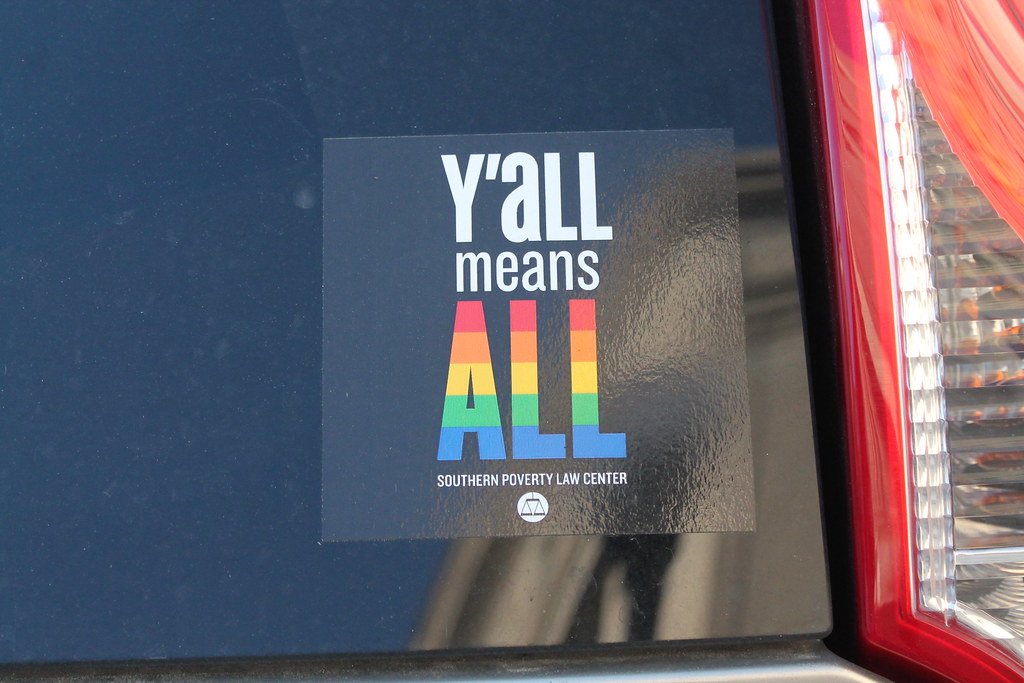
Tyler O’Neil ’12 makes a convincing case that the Southern Poverty Law Center hustles donors and should not be trusted to determine what a “hate group” is in his new book, “Making Hate Pay: The Corruption of the Southern Poverty Law Center.”
The book gets its name from an article published in the New Yorker by Bob Moser, a former writer at the SPLC. In the article, Moser accuses the SPLC of portraying itself as an underfunded organization representing the poor to solicit donations from wealthy liberals, despite having an endowment of more than $450 million.
“We were part of the con, and we knew it,” Moser wrote in that article.
O’Neil picks up where Moser left off and gives the topic the book-length treatment it deserves. The history of the SPLC, briefly covered in Moser’s article, is given in more detail and is more damning in O’Neil’s hands.
O’Neil dives into SPLC founder Morris Dees’s background as a mail-order cake salesman and vividly portrays him as a man desperate to get rich by any means. The best support for O’Neil’s characterization of Dees came from Dees’ own mouth. O’Neil includes a blurb about the time Dees told a reporter that at the SPLC, “We just run our business like a business. Whether you’re selling cakes or causes, it’s all the same.”
O’Neil gives a short account of the good work done by the SPLC fighting for civil rights in the 1970s and against the Ku Klux Klan in the 1980s, which resulted in SPLC offices being burned by the Klan. He argues the SPLC made the transition from upstanding legal nonprofit to partisan attack dog when it began focusing on “hate groups.”
The book is at its best when it is skewering the SPLC’s annual list of hate groups. Conservatives have frequently criticized the list for being biased against them, and these sections of the book offer them an intellectual harbor from which to launch their attacks on the SPLC and its list.
One problem O’Neil found in the list was how inflated the number of hate groups is. In two memorable examples, O’Neil found that the SPLC listed an antiques shop and an individual with a website as hate groups. O’Neil’s presentation of these errors undermines the credibility of the list.
A more serious problem with the list is its bias against conservatives. O’Neil describes an instance where Housing and Urban Development Secretary Ben Carson was labeled an “extremist” by the SPLC for his stance on gay marriage. The SPLC later retracted the categorization and apologized.
O’Neil also points out that the FBI defines a hate group as an organization that’s primary purpose is promoting hostility against a protected group. He reviews the doctrine of some right-wing organizations and argues that having traditional ideas about sex and gender does not make them hate groups.
“These ideas may be wrong, but they are not enough to prove that an organization is a ‘hate group,’ especially when the SPLC lists such groups along with the Ku Klux Klan,” O’Neil writes.
O’Neil argues this bias is dangerous because the stated purpose of the list is to destroy the organizations on it. He proves this assertion by quoting Mark Potok, a spokesperson for the SPLC, who said, “Sometimes the press will describe us as monitoring hate groups, I want to say plainly that our aim in life is to destroy these groups, completely destroy them.”
These arguments make it impossible for any conservative to read “Making Hate Pay” and not be filled with indignation. Unfortunately, the book’s message gets watered down by a lack of focus.
One silly diversion the book explores is a professor’s claim that the SPLC might hire actors to portray members of hate groups at protests to increase interest in their hate group list. Contrary to most of the book, this tale is not fleshed out by any reporting whatsoever. O’Neil doesn’t even bother to vouch for its veracity. It was a poor decision to include an unfounded accusation more suitable for an Alex Jones broadcast in an otherwise fact-driven book.
Another diversion is the section titled “Fighting Back,” which includes a history of defamation cases filed against the SPLC. This part reads like an encyclopedia.
Despite these missteps, “Making Hate Pay” makes the important point that the SPLC is not unbiased, and that serious people should not parrot their categorizations. Everyone who wants to have an educated opinion about the SPLC should read this book.
