
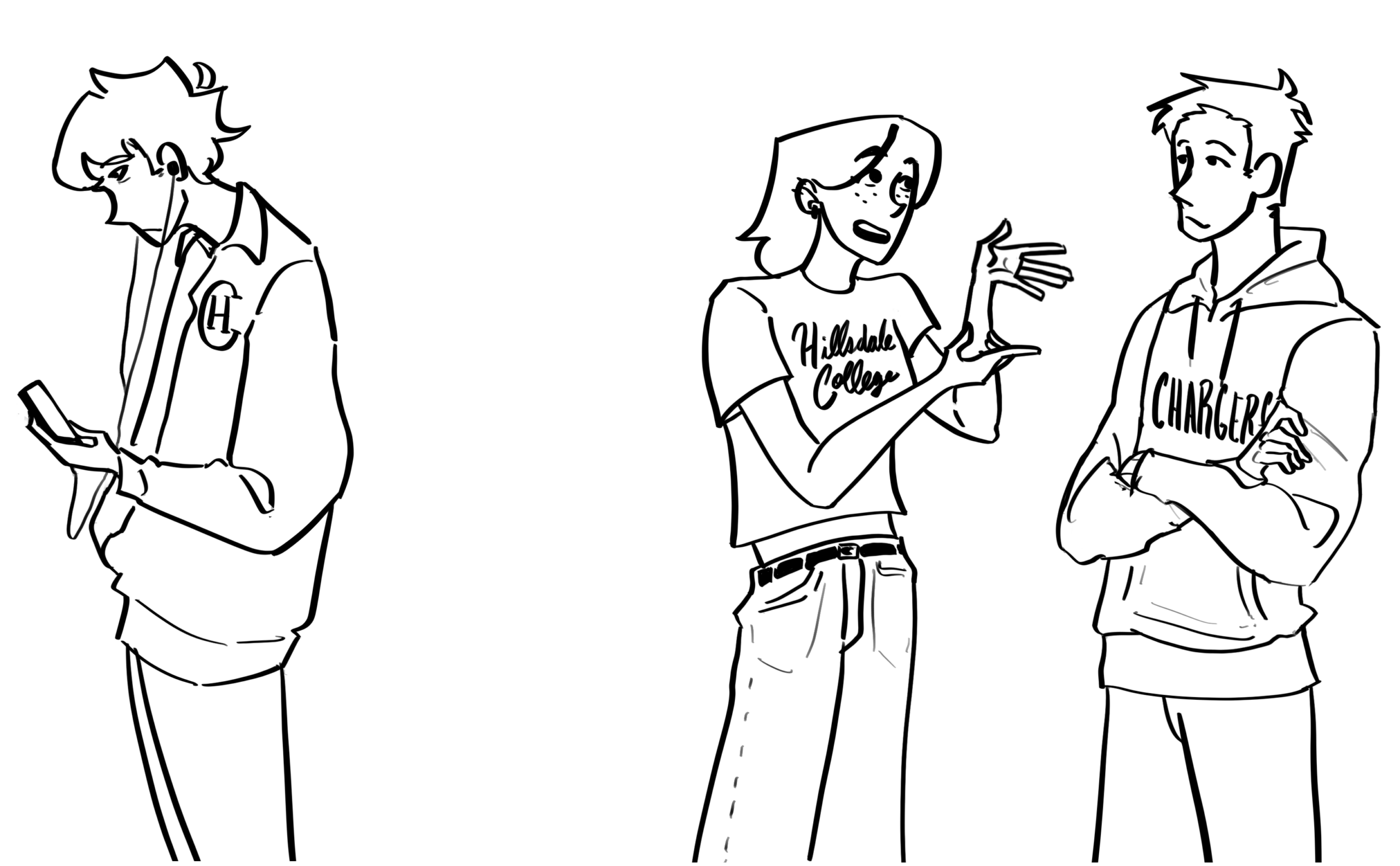
Hillsdale College students often hear that they will save the world. Whether it’s from a friend of the college, a parent, or a CCA speaker, we get the compliment often.
While no student will object to the praise, we should not accept it blindly. Hillsdale remains a bubble. We cannot assume Hillsdale students are the salvation for the United States if we do not know what plagues our generation and our country — and how we are unknowingly part of the problem.
The Society for Risk Analysis found that Generation Z sees more danger in life than previous generations. Instagram feeds filled with pictures of engagements and baby ultrasounds make us forget we’re in the middle of a dating recession. Gen Z does not speak to neighbors, to peers with different political beliefs, or to strangers on public transportation. Young adults increasingly report having no friends and feeling relieved when social plans are cancelled.
Many factors have contributed to the breakdown of social dynamics in America. Pew Research Center has tracked declining trust in social and political institutions that used to bring people together. Political polarization further divides young men and women.
Social media exacerbates these problems. It produces hyper-curated feeds that trap its audience inside a bubble masquerading as a new and improved reality. Instead of encouraging us to meet people, travel, and get out of our comfort zones, social media keeps us in our houses, where we try to live vicariously through our screens.
Leaving the bubble, or venturing into anything that is not the status quo, requires risk. Somewhere along the way, Gen Z lost its appetite for that. We don’t want to be labeled “cringe,” so we don’t dance in the rain or ask strangers questions. We fear rejection, so we don’t try — whether that’s asking a girl out or applying for a dream job.
These factors are not as unfamiliar to Hillsdale as we might think. We have “Hillsdating” — spending time with a romantic interest without committing to an official relationship because commitment requires vulnerability and risk. Many students flock to Jodel for the juiciest campus gossip, and the anonymity there protects them from being held responsible for anything they say.
Social groups like Greeks and fundies, Protestants and Catholics, and athletes and non-athletes alienate one another, but talk badly about each other just the same.
We are told we will save the world and often think we’re better than our peers, but in many ways, we have no reason to feel elitist. We still engage in the self-isolation and risk aversion that afflicts Gen Z. We too must be wary of our generation’s faults.
But we are lucky to go to a school that engages in free dialogue, takes virtue seriously, and isn’t afraid to ponder what it means to be human. We are lucky to be in a community filled with intelligent, genuine, and respectful individuals, mentored by professors who invest in their students.
As a Delaware native, I was stunned by Hillsdale’s Midwestern kindness. It’s a place where strangers make eye contact and smile, conversations happen spontaneously in the lunch line, and someone you’ve only met once will hug you the next time you cross paths.
Strangers can launch into a heated Protestant-Catholic debate in the library and emerge as close friends. We have sporting events like “Frat vs. Fundie” and El Clásico, the annual soccer game between Catholics and Protestants. Through various clubs and on-campus jobs, students venture out of their friend groups to make new ones.
For four brief years, our lives overlap in a thousand different ways, through many connections we might not even be aware of. Our shared curiosity about the world, our commitment to the Honor Code, and our love for the divine have brought us together. This type of wonder is disappearing quickly among our generation. It will vanish if not protected.
We cannot take this community for granted because it may not exist anywhere else. Four years at Hillsdale is too short to hold grudges and make assumptions about people you have never spoken to.
For those of us graduating next spring, don’t be mistaken: Hillsdale is still a unique community. You may find many of your future co-workers are very different people from your peers at school.
But this is no reason to feel superior. It is a burden of greater responsibility. Seniors must ask themselves how they can take this culture elsewhere and how they can be examples to others in the same way Hillsdale professors, mentors, and friends were examples to them. Humbling ourselves to answer that question might be the first step to saving the world.
Megan Li is a senior studying economics.
Illustrated by Maggie O’Connor.
