
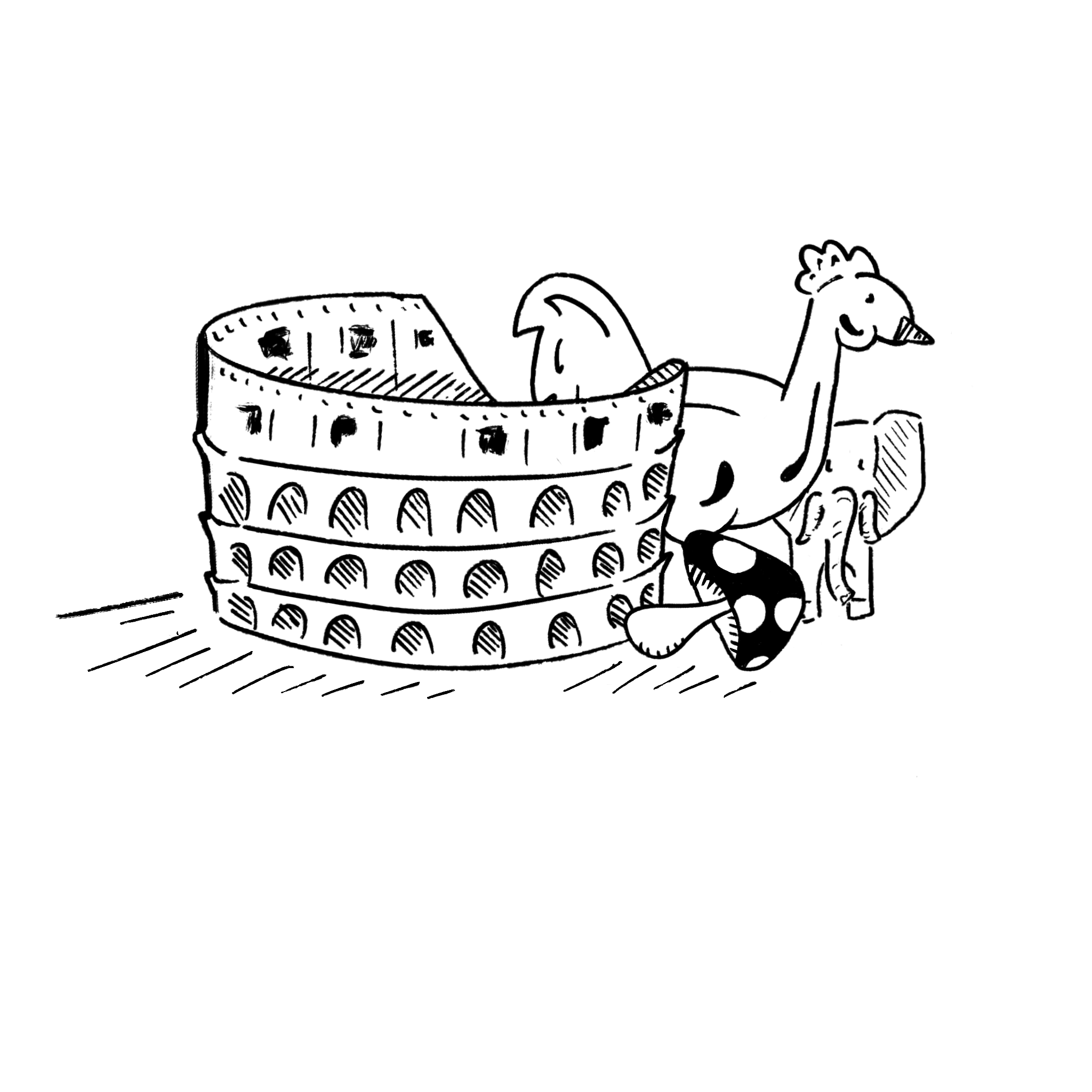
Illustrated by Paige Kutas.
Collecting things isn’t materialistic — it’s human. A collection, gathered well, is a physical representation of what you love.
It is tempting to dismiss collections as materialistic clutter, the result of acquiring objects that serve no purpose. When done correctly, collecting is not a symptom of materialism but a remedy for it. A collection exists simply because it is delightful, and as such, it teaches the collector about what he truly loves.
My miniature Colosseum, glass chicken, hand-carved Indian elephant, and tiny clay mushroom are from all around the world, and seem to have little in common. The relic of Rome is a souvenir; the bird, an heirloom; the elephant, a gift; and the fungi, a discovery from an afternoon walk in the park. These trinkets stand perched on my bookshelves, alongside other small figures from various people and places. Together they form a whole that could belong to no one else: a portrait of what I love and who I am, arranged on my shelf by my own hand.
Souvenirs and heirlooms hold memories of the experiences and people I love. I can’t sell the mushroom for anything, but I keep it because it is delightful.
Rather than collecting things simply to take joy in them, the materialist accumulates objects to satisfy a need those things can’t fulfill. Some may seek status from their collections, or be so afraid to let go of them that they gather dust in basement boxes. These collections become hoards that lack intentionality to the detriment of the hoarder.
A well-cultivated collection results in delight, and it is good to have lovely things — even if they are not useful. The world is full of “useless” goodness and beauty, from the colors of the sunset to the extravagance of 350,000 species of flowers. Children understand the importance of these ordinary, charming things instinctively. A child at the park pockets a rock not because it is useful, but because he likes it.
In “The Little Prince,” a boy who lives on his own tiny planet tends a single rose and thinks it is the only one of its kind. The prince is heartbroken after he finds a garden with thousands like it. He then meets a fox who teaches him that what we care for becomes “unique in all the world” to us. The Prince’s rose is no rarer than the others; it is unique precisely because it is the object of his attention.
Proper noticing takes practice, and leads to collecting in a way that refines your desires. The collector must look closely, choosing this shell over that one, this painting, and that car. To some, collections like these indicate disordered desire, and an unhealthy focus on finite objects.
However, there is an important distinction between the materialist and the collector. The former asks his possessions to make him whole; the latter asks nothing of them, cherishing each simply for what it is. Through this intentional collecting, he learns the desires of his heart, and can distinguish them from what is newest or nearest or advertised.
In doing so, the collector imitates the oldest act of creation: bringing order out of the disordered void. Genesis calls each day’s work good, but it becomes very good when God sees it all together. We cannot create in the same way that God does, but we can gather unique things together into something new and more meaningful.
A collection is more than a set of random objects. A Colosseum replica alone is a souvenir, but set beside a glass chicken and a clay mushroom, it becomes part of the story of the person who noticed and collected them.
Like any work, a collection tells the truth about its maker, about what and how he loves. Ask your friends what they collect, and why. Behind every peculiar collection stands a collector, and in learning what he has chosen to keep, you will understand a little more of who he is.
Reagan Vicars is a freshman studying the liberal arts.
