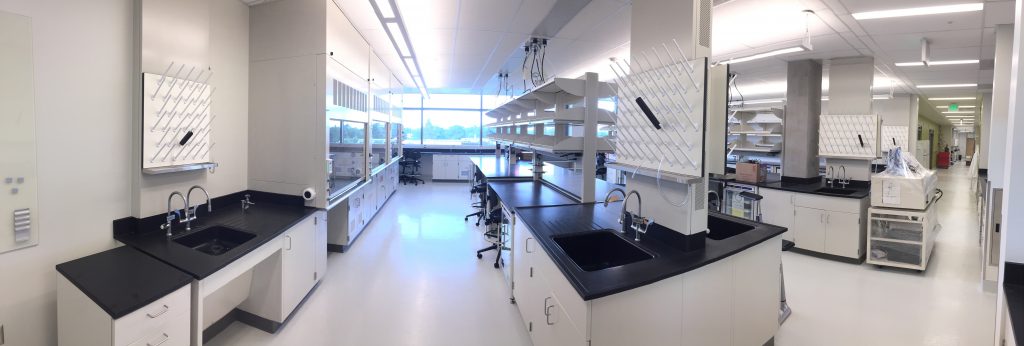
Professor of Chemistry Mark Nussbaum’s sabbatical at Colorado State University allowed him to hike outdoors in the Rocky Mountains almost every weekend — some of the same types of environments where his research devices may someday be used. Nussbaum performed analytical chemistry research in the area of microfluidics in Charles Henry’s lab, the chair of the department of...

Science and Tech
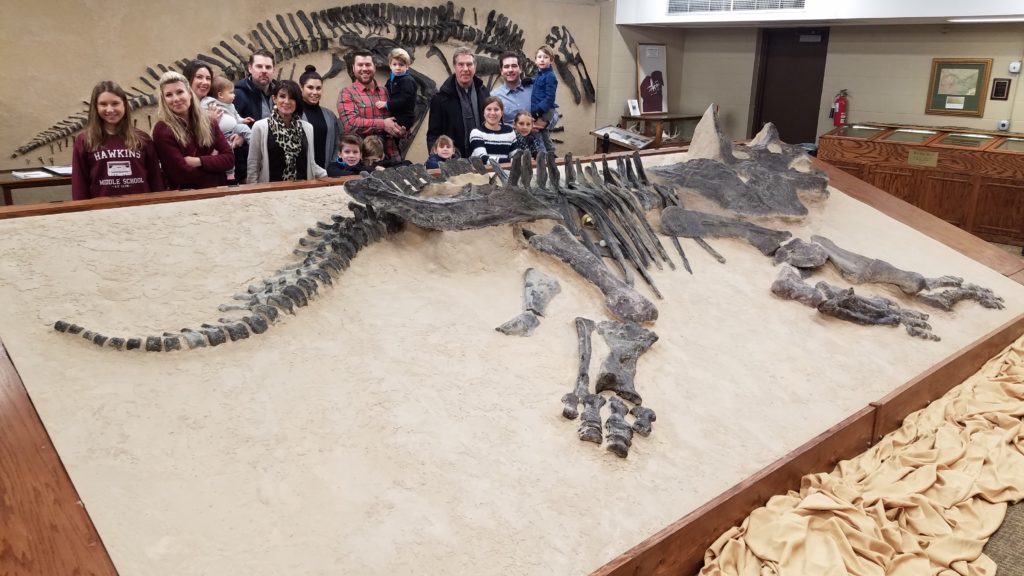
‘Donna’ the Triceratops comes to Hillsdale’s Fisk Museum
A 66 million-year-old triceratops skeleton joined the collection of the Daniel M. Fisk Museum of Natural History in the Strosacker Science Center today in an unveiling ceremony at noon. The skeleton, named Donna, is more than 60 percent complete, and joins “Linda” the edmontosaurus in the museum. Professor of Biology Anthony Swinehart, curator of the Fisk Museum, said triceratops bones...

Student constructs radioactive beams, studies proton drip line
Senior physics major Rebekah Roundey said she likes to joke that she practiced alchemy during her summer research project since the focus of her research involved transmuting elements. Instead of attempting to turn lead into gold, however, Roundey’s research involved the production of radioactive nickel isotopes, or different forms of nickel with varying amounts of neutrons in the atom’s nucleus,...
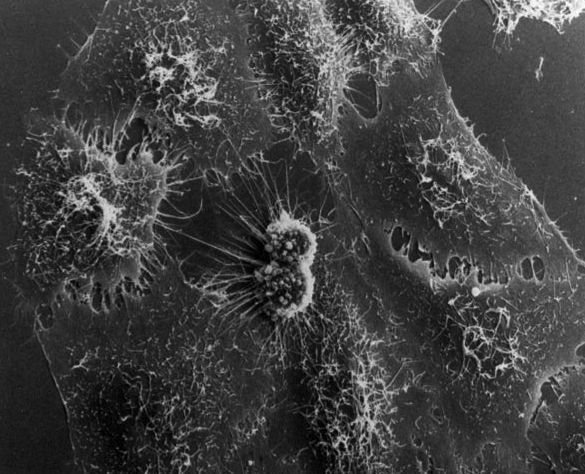
Student research suggests possible target for herpes treatment
Approximately 3.7 billion people worldwide — or 67 percent of Earth’s population — under the age of 50 are infected with the herpes simplex virus type one, which is known to cause cold sores around the mouth, according to the World Health Organization. An additional 417 million — roughly 11 percent of the global population — are estimated by the...
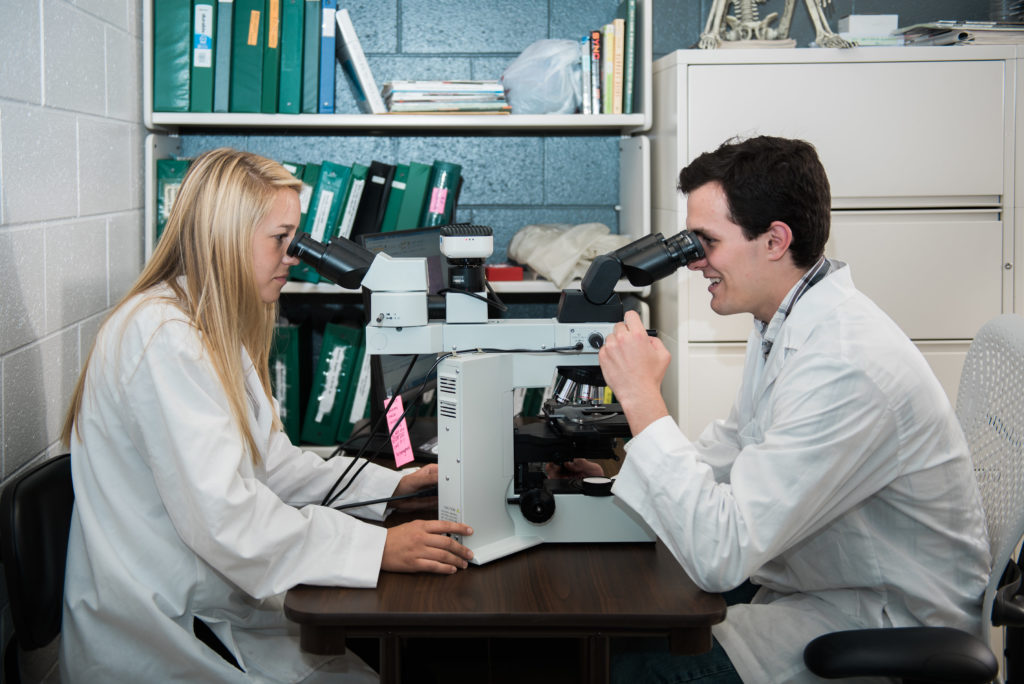
Student contributes to fight against cancer
This past summer, senior biochemistry major Luke Miller researched an anti-inflammatory drug that could possibly be used to treat pancreatic cancer — an effort he was inspired to join because of his little brother’s struggle with cancer. “This is actually like boots-on-the-ground research that is hopefully going to make a difference,” Miller said. “Cancer is so diverse and so complex...
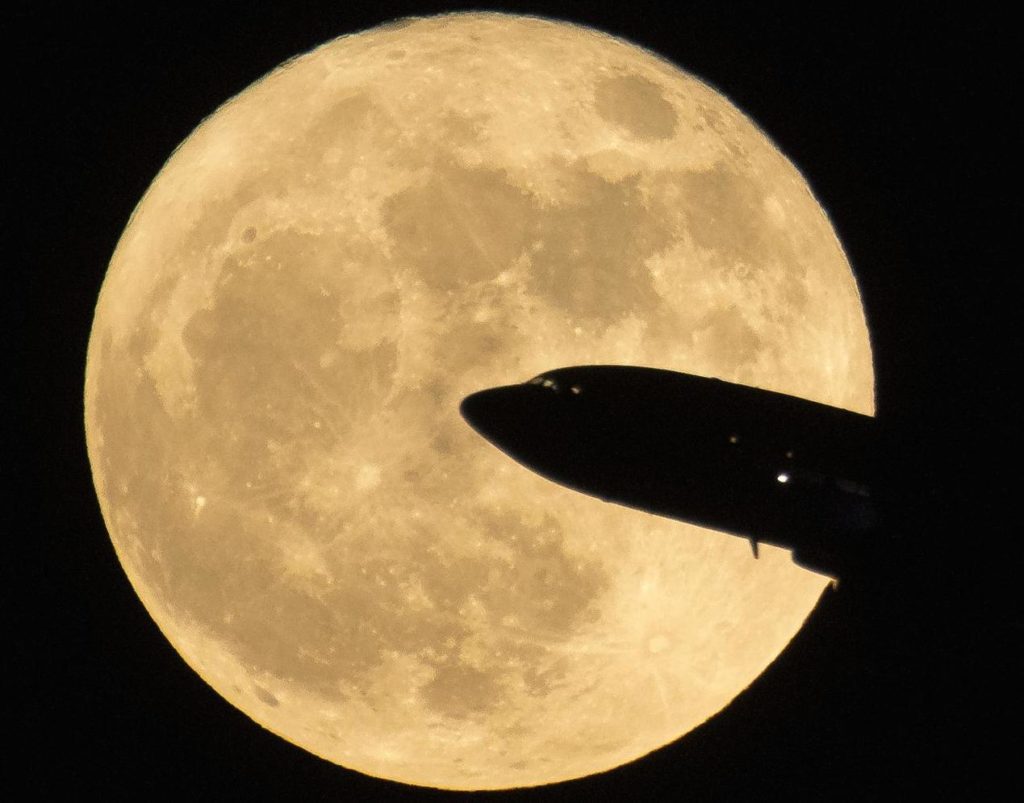
Stargazing and supermoons: Astronomy over the weekend
Although a telescope was necessary to see some of the celestial bodies in the sky during Friday’s telescope viewing, anyone on campus could see the first and only supermoon of 2017 Sunday night. Supermoons occur when a full moon appears larger and brighter than normal. This phenomenon occurs because of the moon’s elliptical orbit around the Earth. During a supermoon, the...
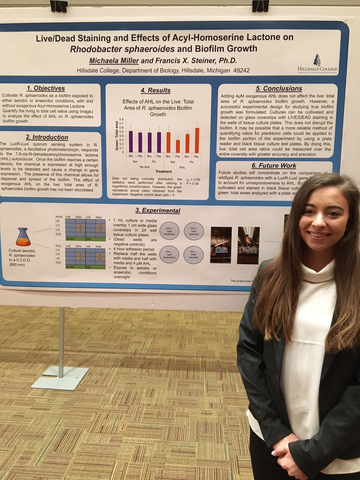
Manipulating model microbes: Student studies biofilms
Senior Michaela Miller spent her summer researching biofilm growth of Rhodobacter sphaeroides — an environmental microorganism with history as complex as its spelling. She presented a poster summarizing her project Nov. 4 at the Western Michigan Regional Undergraduate Science Research Conference at Van Andel Research Institute in Grand Rapids, Michigan. Over the summer, Miller spent roughly 7-10 hours a day...

Untangling the proteins in Parkinson’s disease
Parkinson’s disease, a neurodegenerative disease that results from the death of dopamine-releasing neurons in the brain, affects more than 10 million people worldwide, according to the Parkinson’s Foundation. Although the disease includes a variety of symptoms, patients often experience shaking or tremors, slowness of movement, or trouble balancing. For the past two summers, senior Taylor Zimmer worked as a research...

Liberal arts in space: Student internship at NASA blends English, history, and science
One might expect a physics or math major to intern at National Aeronautics and Space Administration Headquarters in Washington, D.C., but senior Madi Moore is proving that English majors can do important work in the space industry, as well. As a participant of the Washington-Hillsdale Internship Program this semester, Moore works in the NASA History Office, which is part of...