
As the number of students in isolation because of COVID-19 nears 130, students are adjusting to the college’s contact-tracing protocol.
As originally announced in the return-to-school plan in August, Hillsdale’s administrative team works closely with the Branch-Hillsdale-St. Joseph Community Health Agency and the Michigan Department of Health and Human Services to observe Centers for Disease Control and Prevention guidelines for contact tracing.
Director of Health and Wellness Brock Lutz said the college’s case management team, which is made up of a representative from student affairs and the college health center, work with the local health department to conduct contact tracing.
“It is truly a team effort and everyone is being helpful — students, faculty, and staff,” Lutz said. “For example, last Friday night at 7 p.m., there were seven staff members working together to make phone calls and to determine the logistics of moving students effectively.”
According to Hillsdale’s return plan, “the Campus Health Center and Administration will manage contact tracing coordination with the local health department for any student, faculty, staff member, or visitor who tests positive for COVID-19.”
The campus health center is the point of contact for any symptomatic student. From there, the health center uses the Hillsdale Hospital for testing and antibody tests.
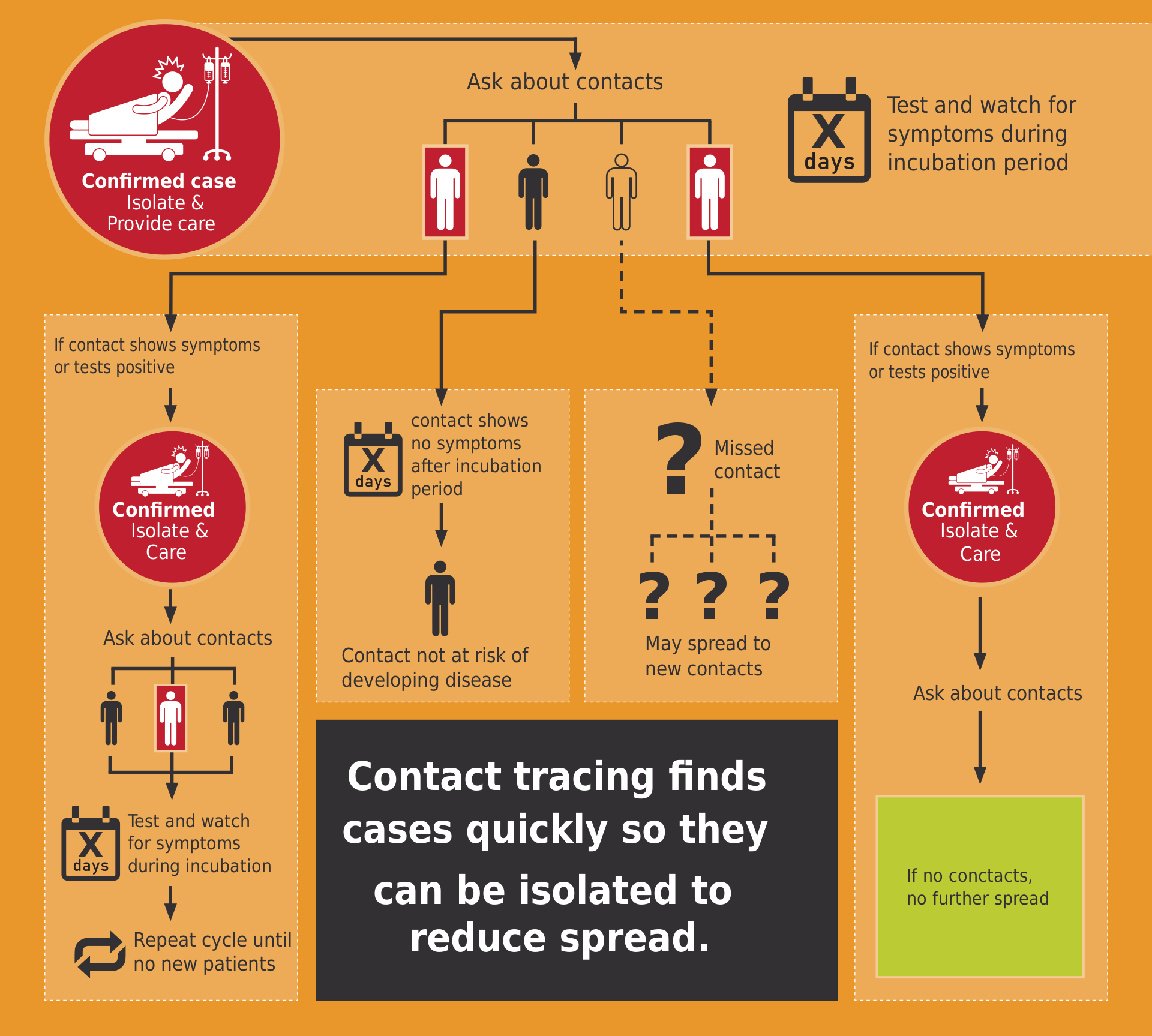
According to the CDC, contact tracing means “letting people know they may have been exposed to COVID-19 and should monitor their health for signs and symptoms of COVID-19, helping people who may have been exposed to COVID-19 get tested, and asking people to self-isolate if they have COVID-19 or self-quarantine if they are a close contact.”
Before contact tracing, health authorities first go through a process of identifying people who may have been close to the positive case. After testing positive, patients are asked to identify close contacts, or people they have been in contact with since two days before they contracted the virus.
According to the CDC website, experts trace contacts based on several criteria of “close contact,” which is defined as “someone who was within six feet of an infected person for at least 15 minutes starting from two days before illness onset (or, for asymptomatic patients, two days prior to specimen collection) until the time the patient is isolated.”
The college has repeatedly emphasized the importance of the school’s cooperation with the local health department.
“The local health department is responsible for contact tracing,” Lutz said in an email. “The college and the local health department have been working in tandem to investigate cases and contact trace. However, we have been trying to expedite things by identifying and isolating those individuals as soon as we can and assisting the health department in their process. Expediency is especially important on our campus because our students not only need to be informed that they should be isolated but many of them also might need a place to stay.”
In response to concerns from the student body that contact tracing has not been effective, Lutz said the administration has been “especially grateful” for student feedback.
“Contact tracing is time-consuming and not always precise,” Lutz said. “In deciding who qualifies for close contact with a positive result, we use the health department standards of: hugging or kissing, eating or drinking after someone, being around a positive individual when they were sneezing or coughing, and in close contact of six feet or less for more than 15 minutes. Sometimes it is not completely clear if someone qualifies, so we try to work with the students to gain more clarity as to not put someone in isolation unnecessarily.”
While 15 minutes of prolonged contact is the standard for prompting contact isolation, whether or not individuals were wearing face masks while in contact, the duration of the exposure, as well as physical contact, all factor into contact investigation.
Identifying a confirmed case’s exposed contacts follows contract tracing.
Junior Clare Nalepa received her certification in contact tracing through Johns Hopkins this summer. While she doesn’t play a role in the college’s contact tracing program, she was trained to identify, manage, and confront possible points of contact.
“I took a course and became a certified contact tracer, meaning I’m on the national registry for contact tracing, so any organization that needs a contact tracer in general can access the registry,” Nalepa said. “We learned how to make sure that we could contact trace following HIPAA guidelines and what COVID-19 contact tracing would entail.”
One of the responsibilities of a contact tracer, Nalepa said, is to analyze the time frame between initial contact and the patient’s infectious period.
“We learned how long you’re infectious, and how long you’re symptomatic,” Nalepa said. “And up to two days before you yourself are symptomatic, you’ve already been infecting people for up to two days. So that’s why the quarantine period for people who are actively showing symptoms is shorter — 10 days instead of 14.”
Lutz said that despite some uncertainty about contact tracing on campus, he is encouraged by students who remain dedicated to campus safety.
“The students have been helpful every step of the way as well, even when they are disappointed or frustrated,” Lutz said.
