
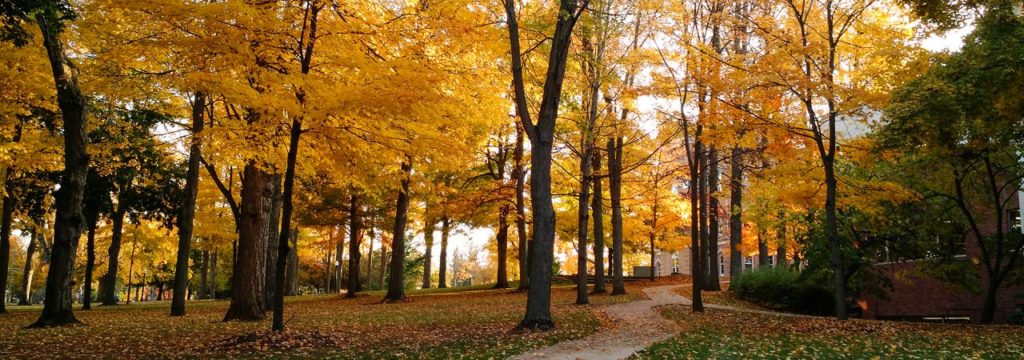
Since 2010, roughly 25 trees have been planted through the City of Hillsdale’s public-sponsored tree planting program. But according to City Forester Gary Stachowicz, that’s still not nearly enough.
“The idea was if we have so many trees come down and only so much money to replace them, we would allow people or businesses that were interested to buy them for the city,” Stachowicz said.
People interested in buying a tree for the city can order any tree from a number of species from one of four local nurseries. Donating money and letting the city pick out the tree is another option. The Hillsdale Garden Club has donated enough money in the past to plant 13 trees.
The cost of the tree is a one-time payment, as the cost of maintenance and possible future removal of the trees is covered by the city.
“We try to do 25 to 40 trees a year,” Stachowicz said. “I don’t have a very big budget. The same money I plant trees with is the same money I hire contractors to do tree removal and tree trimming. About one or two trees a year come from the public tree planting program.”
Despite trying to preserve as many trees as possible and plant new ones, some have to be removed, which increases the need for even more trees. Stachowicz said trees are removed if they’re “dead, dying, diseased, rotting, or over trimmed if they’re under power lines.”
But one major reason there is such a great demand for trees dates back to the 1990s and early 2000s: the emerald ash borer.
In 2014, the Lansing State Journal published an article about this deadly beetle, saying that “the ash borer has wiped out virtually every ash tree in southeast Michigan. In much of the rest of the state’s lower peninsula, there are few trees left to fight for.”
And fighting is just what Stachowicz is doing with this public-sponsored tree planting program.
“I can’t imagine city streets not being lined with trees,” he said. “It’s just a different way of life when you’re used to trees when you get the fall colors and the green in the spring.”
These trees aren’t just aesthetically pleasing. They serve a greater purpose by increasing the cost-efficiency in homes and businesses as well.
“Picture being out in the county somewhere where you have a farmhouse that might have three or four rows of conifer trees planted in a 90 degree angle to break wind,” Stachowicz said. “It helps the house with heating costs. And the shade helps with cooling costs in the summer.”
Similar to houses along the county roads, city streets lined with trees provide the same benefits to houses and businesses.
This isn’t just a Michigan problem and the effects of the emerald ash borer have yet to be erased.
“This is still one of the front lines in the fight against an insect that has laid waste to more than 100 million ash trees from Massachusetts to Colorado and has another 8 billion or so waiting for it,” according to the Lansing State Journal.
Because this is national problem, national programs have gotten involved, but their assistance since then has diminished.
“The federal government spent $2.2 billion in 2012 to combat invasive species and to prevent new entries. The USDA spent $26.8 million that year to fight the emerald ash borer,” the Lansing State Journal said. “In 2013, it spent just $10.7 million.”
It’s estimated that this pest costs the United States $1 billion each year, according the the Lansing State Journal. This is why cities need help from their communities.
The cost of trees depends on their size, which is measured by its caliper — the radius of its trunk six inches from the ground. Stachowicz requires a minimum of a two-inch caliper for trees, which typically start out at $250 he said. It can go up from, sometimes costing $600.
Stachowicz said he would like to plant at least 25 trees this spring, especially by Ripon Ave, which lost 33 trees due to construction this past year.
“I can’t imagine every street looking like Rippon Avenue,” he said. “It just looks like a barren desert.”
