
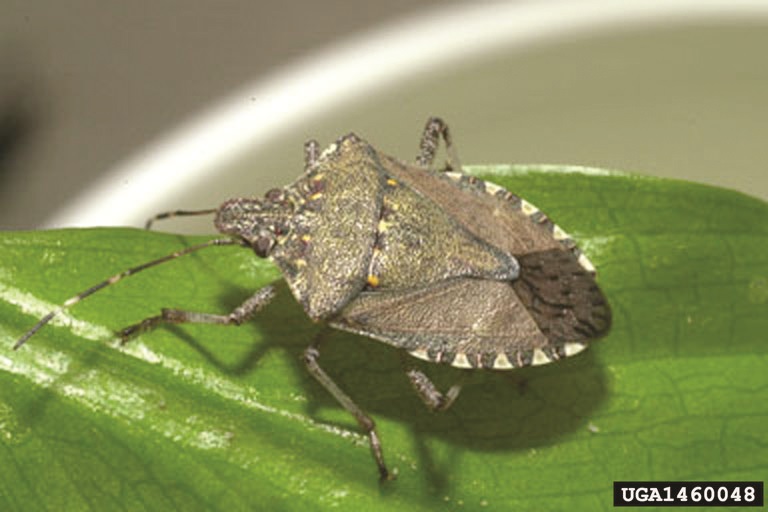
A Virginia Tech research experiment suggests that last month’s polar vortex may have killed up to 95 percent of the stink bug population in Southern Michigan — but Hillsdale residents haven’t noted much in the way of change.
Hillsdalians are no strangers to the pesky stink bug. And while they are very familiar with scanning the window sills for any of the intruders, what they might not know is that stink bugs weren’t always a problem in Michigan — only recently were they accidentally introduced to the environment.
The brown marmorated stink bug, or “Halyomorpha halys,” isn’t a species native to Michigan. This invasive species was brought to North America from Asia by accident in the late ’90s and was first found in Michigan in 2010.
Stink bugs are excellent at finding shelter. That’s why they can be found in almost every house, dorm, and apartment during the winter time.
And that’s also why this study is a bit misleading.
While 95 percent of the stink bugs that were unable to find shelter may have been killed off, the majority of them would have already found adequate winter shelter by the time the polar vortex struck. These stink bugs will leave their hiding places once warmer weather beckons them forth; so the residents of Hillsdale need not fret — they’ll be back to swatting these pests away as per what has become custom soon enough.
Professor of Biology David Houghton, Hillsdale College’s resident entomologist, weighed in on the matter.
“It will take several cold winters in a row to eradicate the outdoor populations of stink bugs. Plus, being synanthropic makes them extremely tolerant of cold weather,” Houghton said.
A synanthrope is a species that lives in close association with and relies upon humans. Since stink bugs are synanthropic, they are able to survive even the coldest of winters because of the access they have to artificially heated environments, like houses.
Hillsdale’s off-campus residents report mixed experiences with stink bugs in the aftermath of the polar vortex; some have noted a decrease while others claim nothing has changed.
Junior Fiona Kelly reports that her off-campus house has not had much of an issue with stink bugs this year before or after the polar vortex.
“The Womb is stink bug free,” Kelly said. “Which is pretty ironic because this place is old as heck and it wasn’t kept up for years before Reagan and I moved in.”
Senior Eliza Lewis, also an off-campus resident, has had no such luck.
“I have not seen a rapid decline since the polar vortex. In fact, I’ve seen an increase and I think they are taking shelter in my fan light bowl,” Lewis said. “They are living out of my room, I swear. The bowl where the light is in my fan has maybe 10 dead ones because they fly in and can’t escape. I hope they go extinct. They are an invasive species, and I hate them more than anything.”
While extinction doesn’t appear to be a possibility in the near future, rest assured there are other measures that can be taken to help remove these pesky creatures.
Those hoping to once more study peacefully in their homes — or dorms — without threat of bombardment by these pests can make what is called a light trap.
Take an aluminum pan and fill it with an inch of water and add a bit of liquid dish detergent to it. Use a lamp to shine a light into the pan; the bugs, attracted to the light, will fall in and drown.
It looks like the residents of Hillsdale will have to put up with stink bugs for a while yet — so ready your extermination method of choice, whether it be a light trap, a flyswatter, or a slightly-more-courageous friend or roommate.
