
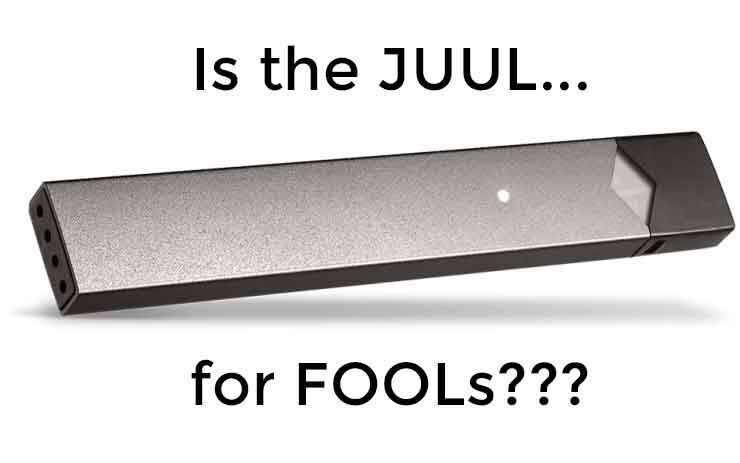
“Hitting the Juul” has become a common phrase as high schoolers and college students increasingly turn to Juul as a “cool” form of e-smoking.
Juul is a brand of e-cigarettes that delivers an aerosol mix of chemicals, nicotine, and flavoring to the user, according to the American Cancer Society. One Juul can contain as much nicotine as an entire pack of cigarettes.
Senior Haley Hauprich has set out to criticize that, opening a Facebook page against using Juul products.
“It’s gotten very popular with college students especially,” Hauprich said. “It’s a very big pop culture thing.”
She was inspired to begin the page after seeing her friends using Juul.
“I thought, ‘This is so dumb. Why are people doing this?’” Hauprich said.
The Facebook page, called Anti-Juul Coalition, is mostly devoted to memes and is not particularly serious.
While Hauprich said she’s not trying to start a campaign, she would like to see people’s opinion about juuling change.
“I would love to see people not using it,” she said. “Getting a nicotine addiction just for the sake of being cool is not a very good idea.”
Senior Mark Compton, another leader of the Anti-Juul Coalition, said that he believes that Juul is good when used for the purpose it was created for.
“I don’t dislike Juul,” he said. “I think that if you’re trying to quit smoking, they’re fantastic. I don’t think that you should buy one if you don’t smoke, because I’ve seen a lot of people that didn’t have a nicotine addiction develop one from a Juul.”
Senior James Burke, a Juul user, said that he turned to Juul because it was a healthier alternative to cigarettes.
“When I got to campus as a freshman, I was a social smoker for a little bit,” he said. “Then I realized quickly that that wasn’t healthy for me. A lot of tobacco products tend to be expensive, so I wanted something that I could use more frequently, that wasn’t as physically dangerous, didn’t make me smell bad, didn’t make the other people around me feel uncomfortable, and that was more cost effective.”
The answer, for Burke, was found in Juul, which he said is cheaper and healthier than cigarettes. Juul, Burke explained, costs only around $4 a pod, which is equivalent to a $10-$12 pack of cigarettes. In addition, he has read many of the recent studies on Juul that have come out over the past few years.
“The general consensus is that it is healthier for you than other tobacco products,” he said.
Addiction has not proved to be a problem for him, he said.
“I don’t really use it when I go home on breaks, and I haven’t had any withdrawal symptoms or cravings for it, so I think that addiction is really a more personal thing. Some people struggle with addiction more or less than others,” he said.
When asked if he was concerned that Juul would be used by teenagers who have not smoked, creating nicotine addictions, he replied in the negative. To Burke, the teenagers that use Juul are the same ones that would try cigarettes. The teenagers who try Juul are those who would try anything that was frowned upon, including cigarettes if Juul was not available.
“If you look at, over the past five decades, high schoolers have been smoking cigarettes, like they always have been,” he said. “It’s one of those things that’s going to happen, and it’s not a good thing, but that’s the reality of it that young people are going to try those things. I don’t think it really changes much.”
Zulfiqar Mannan, reporting in Yale Daily News, Yale University’s campus newspaper, described the ways in which Juul has impacted Yale’s campus. She told the story of a friend:
“I started [Juuling] when I started going out and people would have cigarettes and I’d be like, oh, I really enjoy the nicotine but I don’t want to get into smoking cigarettes,” Jazzie narrates now.
She thought it would be a “fun thing to try.” Fun, that is, until she realized her addiction.
Today, Jazzie vehemently “does not recommend the Juul to anyone.”
But, is Juul actually bad for you? In a 2016 report about e-cigarette use, Thomas R. Frieden of the Centers for Disease Control and Prevention said, “Tobacco use among youth and young adults in any form, including e-cigarettes, is not safe.” He continues, “Nicotine exposure can also harm brain development in ways that may affect the health and mental health of our kids.”
In an interview published online, Cliff Douglass, Vice President for Tobacco Control of the American Cancer Society, added that this also applies to college students.
“The brain is still developing well into the mid-20s and even beyond, so health concerns apply not only to teens but also to college-age users,” he said.
According to the U.S. Department of Health and Human Services, these health concerns include disruption of “the growth of brain circuits that control attention, learning, and susceptibility to addiction,” and they “can include lower impulse control and mood disorders.”
The report, released by the United States Surgeon General in 2016, also expressed concerns that e-cigarette use would lead to further problems.
“Research has found that youth who use a tobacco product, such as e-cigarettes, are more likely to go on to use other tobacco products like cigarettes,” it stated. “The nicotine in e-cigarettes … can prime young brains for addiction to other drugs, such as cocaine and methamphetamine.”
These concerns led the Food and Drug Administration to retaliate. According to The New York Times, on Sept. 28 2018, they “conducted a surprise inspection” of Juul’s headquarters. They seized approximately a thousand documents, which are in addition to the 50,000 pages of documents handed over to the FDA earlier in the year by Juul.
In a USA Today report, FDA Commissioner Scott Gottlieb said “the agency will halt sales of flavored electronic cigarettes if the major manufacturers can’t prove they are doing enough to keep them out of the hands of children and teens.”
However, Juul is working with the FDA. In a statement reported by USA Today, Victoria Davis, a spokeswoman for Juul, said, “We are focused on engaging with FDA, lawmakers, regulators, public health officials, and advocates to drive awareness of our mission to improve the lives of the world’s one billion smokers and to combat underage use so we keep Juul out of the hands of young people.
In fact, visitors to Juul’s website will be asked whether they are 21 or older and willing to verify. If they answer in the negative, they will be redirected to the NIH SmokeFreeTeen website. Juul’s website only sells products to those who are over 21 years of age.
