
Not many people know someone who has gone out for coffee with one of the world’s most famous singers. Even fewer know someone who was a renowned singer themselves, still less who personally trained one of Europe’s most highly regarded sopranos.
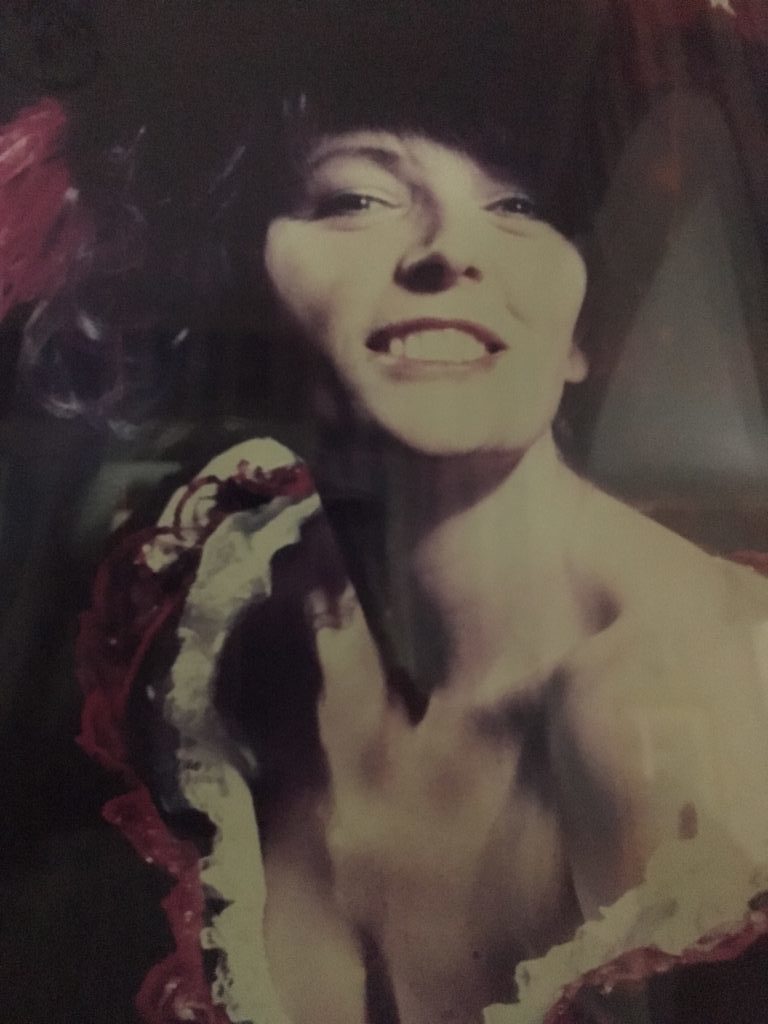
Melissa “Missy” Osmond, Hillsdale’s professor of voice, has done all those things. Not only that, she’s been a key player in taking Hillsdale’s tiny music department and growing it into what it is today.
Although she began singing when she was only in high school, Osmond quickly jumped into an operatic career. After attending Simpson College, she was hired at the Chicago Lyric Opera.
“I got to work with all the greats, and I was only 22 or 23 years old,” Osmond said. “Right from the get-go, I was learning from Luciano Pavarotti, Placido Domingo.”
Domingo was labeled the “greatest tenor of all time” by BBC Music Magazine, based on a 2008 poll. The New York Times reported that Domingo has played over 150 operatic roles, three times the number most internationally-renowned musicians reach. Domingo has been associated with pop music as well, from his hit, “Perhaps Love,” recorded with John Denver in 1981, to his more recent rendition of “Silent Night” with The Piano Guys.
Osmond got to know Domingo well.
“He was a very good friend of mine, and a good mentor and teacher. He taught me a lot, especially as a young performer,” she said.
Osmond said that she became a fan of Domingo as a college student. When she began working with the Chicago Opera, she discovered that Domingo was going to act in one of their productions. She recollects, “I went up to him and told him this story, and he said, ‘That’s so great! Do you want to go out for coffee and talk?’” Domingo began regularly going out for coffee with Osmond, encouraging her to continue pursuing her career.
Three years later, Domingo returned to Chicago. He found Osmond’s phone number and gave her a call. She remembers him saying, “It’s me, Placido. I was wondering if you wanted to go to the opera with me tonight. Come backstage first, and meet my friends, and then we’ll all go to dinner at their house after the show.”
That night, Osmond drove her old beater down to the opera to hear Domingo and meet his friends. After the show, they had dinner in one of the wealthiest areas of Chicago. The topic turned to advertising.
“The four of us, we’re sitting around talking, and Domingo says, ‘What do you think I should do? Here’s Pavarotti with his American Express commercials.’ So I said, ‘Why don’t you do Rolex? That’s classy.’ He said, ‘What a good idea!’”
Domingo did indeed go on to advertise for Rolex. In fact, his Rolex advertising career would span nearly four decades, including dozens of print and television ads.
“He asked me if he could have a ride home, so I took him back to his hotel, and he said, ‘Well, I’d invite you out to coffee, but I’ve got to be on the Johnny Carson Show tomorrow,’” Osmond continues. “I remember sitting watching Domingo on the Johnny Carson Show and thinking, ‘I just had dinner with him last night.’”
Osmond continued her friendship with Domingo, taking lessons from him wherever she could, including in Detroit, Chicago, New York, and London.
By this time, Osmond was beginning to become more well known. She was singing across the country and even made some international appearances. Some of her roles included Mimi in “La Bohème,” Rosalinda from “Die Fledermaus,” and Anne Truelove in “Reich’s Progress.”
Her friendship with Domingo continued over the years. She remembers him giving her and her husband free tickets to operas and sending them a card to congratulate them on their first child.
“He’s just such a gentleman,” Osmond said. “It was all very professional and sweet.”
In the mid-1980s, Osmond already taught at two other colleges when a friend asked her to teach at Hillsdale, which had a very small music department. There was only one person majoring in music at the time, and the choir had only 12 members.
Soon after Osmond arrived at Hillsdale, a group of very talented freshmen women also arrived. Osmond realized that the girls needed something more.
“I went to the chairman of the department at the time and said, ‘I’ve got this group of women that are really quite amazing. Can I create some classes for them? Some of them are really going to sing.’”
The chairman, Professor Eldred Thierstein, approved, and so Osmond, together with Debra Wyse, the accompanist for Hillsdale’s choir, began to put together a new curriculum.
“When you care about what you do, and you see a need, you have to meet it, and so that’s what we did,” Osmond said. “We did an opera history class together. We dragged the students all over the country and Canada doing auditions and competitions.”
Wyse remembers those days well.
“We even shared an office together,” Wyse recollects.
“We went to the NATS competition up in Toronto,” Wyse continued. “It was the division for the Great Lakes region, so all these schools were competing — Michigan State, University of Michigan, Indiana University, all these big music schools,” she said. “But our girls placed in the top five in each of their respective categories.”
Under the tutelage of Osmond and Wyse, the girls excelled; several gained recognition after graduation. One in particular, Diana Higbee ’96, became a world-famous singer. She performed throughout Europe, ran a weekly television show covering live performances and art exhibits, and sang the French National Anthem in Le Mans in front of 250,000 people with an additional 15 million watching worldwide. Today, Higbee resides in France.
“Studying with Missy was a privilege,” Higbee said in an email. “She taught us so much about stage presence, movement, and performing. It is thanks to her putting me on stage in ‘Bastien and Bastienne’ by Mozart that I realized what my calling was.”
Osmond’s teaching has continued to help students achieve their full potential, and she enjoys it.
“When you teach on a one-to-one basis, the students leave as your friends,” she said. “You become very close to them, and you care about what happens. It’s just a really personal way of teaching, and I love it.”
One of her current students, sophomore Michaela Stiles, agrees.
“The lessons are the highlight of my week,” Stiles said. “There are days when I go into a studio lesson, and it may have been a rough week, and I might break down sobbing in the middle of a warmup. We’ll talk about whatever’s going on. Or we’ll just sit there and laugh….She really cares about all of you as a person, and that’s what makes Missy so special.”
