
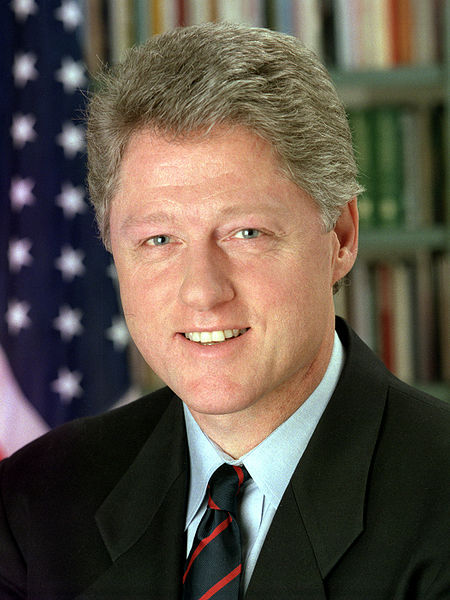
James Rogan is a California Supreme Court judge. Previously, Rogan served in the House of Representatives, where his colleagues chose him to be a prosecutor in the U.S. Senate impeachment trial of President Bill Clinton. He spoke at Hillsdale College on “Stories of Political Leaders I Have Known (and Annoyed)” Thursday, Feb. 18.
When did you know you wanted to pursue a career in politics and law?
Probably around the fourth or fifth grade. I was a real history buff. I loved history. I loved reading about history. I loved reading about political history in government, politics, and biographies of politicians. I think at some point I figured out that politics was the place people went if they wanted to have their hand on the wheel of making history because the two intersect. It was so long ago that I can’t remember a time that I did not want to be a lawyer and, at some point, have an opportunity to engage in the political process, but I can track it back to the fifth grade.
What challenges did you face while pursuing your career?
I think the hardest challenge I faced was just getting through school because I came from a very disruptive and dysfunctional family background. Nobody had gone to college. I was the oldest of four children, and all four of us were high school dropouts. I had a single mom who was on welfare and food stamps, and she was a convicted felon. Coming from a dysfunctional background like that, trying to keep one’s focus on all the things that are necessary to get your education, was probably the most difficult thing.
Have you ever regretted your decision to pursue Clinton’s impeachment, even though it may have cost you your congressional seat?
No, I’ve been asked that so many times in the past 15 or so years, and the reason I’m still able to say no is because I knew that it was going to cost me my seat before I ever cast a vote to impeach Bill Clinton. I had just been re-elected with a bare 50.1 percent, and my constituents said, “If you vote to impeach Bill Clinton, we will never vote for you again.” And what was even more amazing is the high number of those who were Republicans. It was a very pro-Clinton district. I mean, the voters in the district liked me, but they loved Bill Clinton.
The night the House Judiciary Committee had to vote, Speaker Newt Gingrich pulled me out of committee and said he wanted to talk to me. They had also polled my district because we had a very close Republican margin, and he was concerned about my re-election. He pulled me aside, and he said, “Have you seen the polling data in your district?” I told him I had, and he said, “Look, we’ve got the votes in committee to send out articles of impeachment. We don’t need your vote.” So he was basically in a protective, big-brotherly way telling me to vote no so that it would protect me back home. I appreciated his thought process because the Republican majority was very bare. A loss of the majority would’ve meant a loss of Henry Hyde being the chairman of the Judiciary Committee versus John Conyers being the chairman of the Judiciary Committee, so the stakes were very high. But I told him with a big smile, at the end of this back and forth, “You know, Mr. Speaker, if you wanted me to approach it from that perspective, it probably wasn’t a good idea for you to put an ex-judge and an ex-gang murder prosecutor on the Judiciary Committee. I’ve got to call this as I see it, but thank you for looking out for me.”
How should a politician balance standing on principle and pragmatism?
Well, hopefully, when one stands on principle, they do it in a district where the principle fits the demographics of the electorate. I mean, I was a conservative Republican representing a very liberal, Hollywood district with a lot of the Hollywood movie studios in the district, and the ones that were outside of my district, many of their employees fed from my district, so it was a very pro-Clinton district. I won my election with 50.1 percent in 1996 when Bob Dole, who was the Republican nominee for president, lost my county by, I think, 20 points. Two years later, the Republican nominee for governor lost my county by 25 points. I won with 50.1 percent, and when I finally lost, it was by nine points, and President George W. Bush lost my county by 33 points, so it was tough sledding to begin with. People voted for me previously, I think, because they liked me; they respected me, but when I voted to impeach president Clinton, I knew what the reaction would be. That vote was going to make them mad; that was going to make them angry. And when voters are angry with you, it’s really tough to get them to go to the polls and pull the switch for you.
