
Hillsdale’s Liberty Walk is incomplete.
The current collection honors historic and contemporary advocates for freedom, among them Thomas Jefferson, Abraham Lincoln, and Ronald Reagan. Although the individuals enshrined in the Liberty Walk celebrate Hillsdale’s steadfast commitment to liberty, none embrace liberty’s deepest significance.
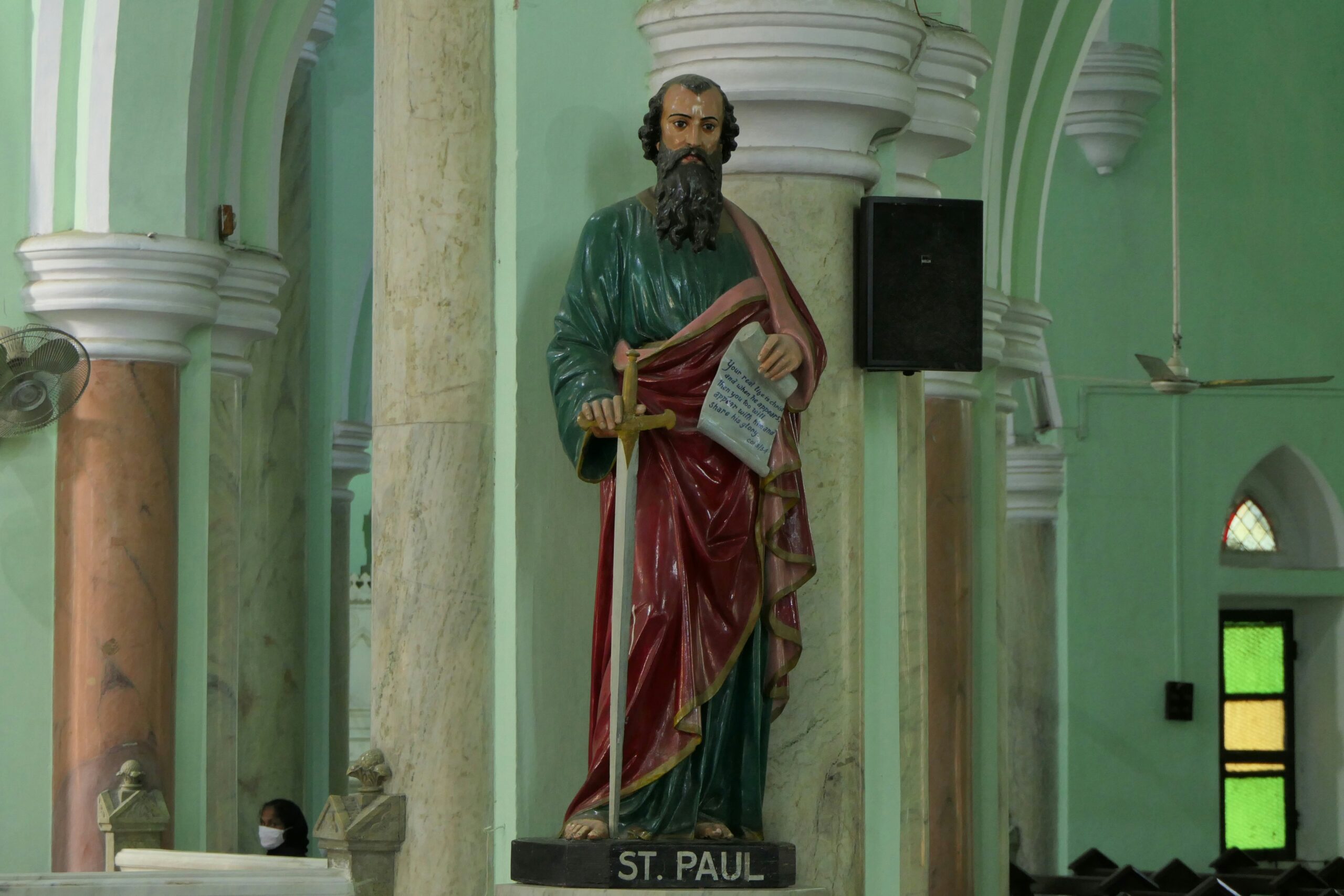
Only one man in history bestowed universal, eternal, and ineradicable liberty: the “everlasting man.” Jesus chose one spokesman in particular to articulate the meaning of this liberty — the Apostle Paul. His statue belongs on the Liberty Walk.
The college prides itself on its Christian identity. It should pride itself equally on cultivating its Christian image. To be sure, the Liberty Walk’s present composition features many Christians, but none whose Christian identity outshone their political prestige. They are statesmen first, and if Christian, Christian second.
The Princeton Review ranked Hillsdale students as the No. 1 most religious students in the nation last year. It’s high time the Liberty Walk reflected the Christian commitments of the student body and college institution alike. St. Paul’s presence would remedy the conspicuous absence of explicitly Christian figures among the Liberty Walk and testify to the “intelligent piety” of the college and its students while satisfying both Catholics and Protestants. It could stand appropriately near the entrance to Christ Chapel.
Paul deserves a statue because it is his distinct understanding of Christian liberty — rather than the neutral, libertarian notion of liberty — that animated the moral imagination of those currently memorialized on the Liberty Walk. Washington and Lincoln strove to preserve the kind of liberty that John Adams termed “liberty under law,” a liberty situated within the framework of natural law and a transcendent moral order. That same liberty that St. John Paul II said “consists not in doing what we like, but in having the right to do what we ought.” It is this formulation of freedom that St. Paul gives to the West and from which the greatest statesmen in the Anglo-American tradition derive their understanding of the concept.
The Pauline epistles identify the source of this true liberty: Christ’s redemptive sacrifice and miraculous resurrection, by which he freed mankind not only from the Old Law, but from the fetters of sin and death. This freedom is not a temporal freedom from earthly oppression, such as that for which Douglass or Churchill labored. Rather, this is a spiritual freedom, transcending earthly freedom in dignity and consequence.
As Paul reminds the Galatians, “For freedom Christ has set us free,” therefore exhorting them, “do not use your freedom as an opportunity for the flesh, but through love be servants of one another.” To the Romans, Paul likewise explains, “For the law of the Spirit of life in Christ Jesus has set me free from the law of sin and death.” Paradoxically, authentic freedom, according to Paul, means becoming “slaves of righteousness.”
In Christ, then, even those suffering physical persecution, enslavement, or imprisonment can attain freedom. Because as Paul teaches in Ephesians, “we wrestle not against flesh and blood, but against principalities. . . against spiritual wickedness in high places.”
To endorse St. Paul is not to neglect the accomplishments of James Madison, Winston Churchill, and company. Nevertheless, the Liberty Walk risks becoming sterile and superficial if it omits the fons et origo of liberty in the Western heritage — freedom in Christ.
Hugh Macaulay is a senior studying history.
