
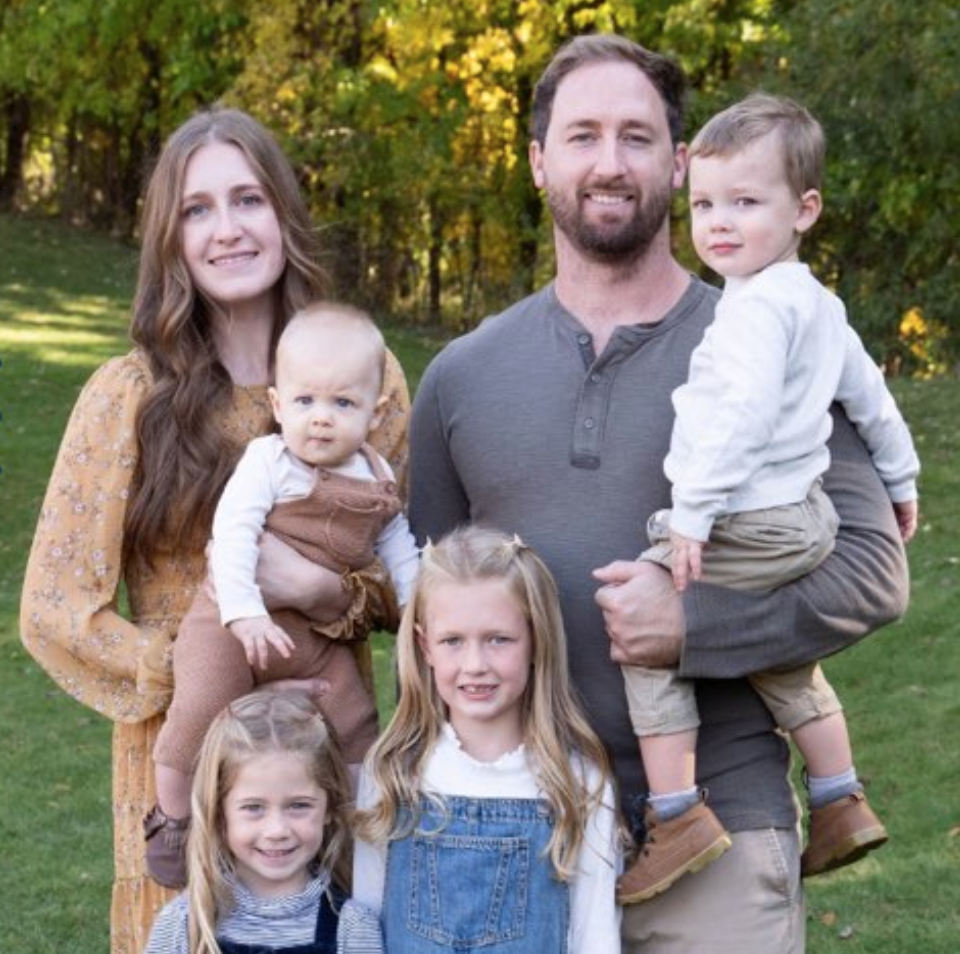
Jacob Bruns and his family. Courtesy | Jacob Bruns
Jacob Bruns aims at crime, drugs, and SADs
New Hillsdale City Council member and graduate student Jacob Bruns said he will employ a simple approach to his role as he serves for the next four years.
“The role of city council is first and foremost to serve the citizens — to ensure the city is safe and the citizens are protected from violence and hard drug usage,” Bruns said. “We should provide basic services like road repair without burdening the citizens with excess taxes for additional projects.”
Originally from Holland, Michigan, Bruns moved to Hillsdale in 2020 after graduating from University of Dallas and then working as a teacher in Arizona.
“The whole time I wanted to return to Michigan,” Bruns said. “I had various opportunities, one of which was to be a graduate student here at Hillsdale, so here we are.”
Bruns lives in the City of Hillsdale with his wife and four children. Bruns will continue teaching humanities and American history at Jackson College as an adjunct professor and pursue his Ph.D. at the Hillsdale College Van Andel Graduate School of Statesmanship.
Shortly after arriving, Bruns became involved in local politics.
“I got hit with a special assessment district soon after moving in,” Bruns said. “I’ve got a young family, and then I became a grad student, so getting hit with a $5,000 bill to get the road fixed was tough. That sort of sucked me in, seeing there are actual consequences to decisions made in the city council for people and for my neighbors.”
Bruns said although the Michigan climate is unfriendly to roads due to constant freezing and thawing cycles, the city should prevent the roads from falling further behind without special assessments on residents.
“The city taxes are maxed out, so they turned to the special assessments because they cannot legally tax the people of the City of Hillsdale any more than they’re already taxing them,” Bruns said.
Instead, he said the city needs to cut the budget’s non-essential spending to take the financial burden of special assessments off of Hillsdale residents. For example, he said the Dial-a-Ride transportation in Hillsdale is a big annual net loss, as well as upcoming spending on the Hillsdale airport.
“In the end, you don’t have to come up with that much money to stop special assessments,” Bruns said. “They bring in about $150,000 a year on average. So if you can find $150,000 in the budget, then you end them.”
Bruns said another important issue for the city council is homelessness and drug use. He served on the Homelessness Task Force, a group appointed by the mayor in 2023 to diagnose the local homelessness situation and give a recommendation to the city council about further action.
“We met periodically until the task force was dissolved, and what I gathered from some of our interviews with various local officials is that the methamphetamines and, more especially, fentanyl problems have gotten really bad in this county in the last 15 years,” Bruns said.
He added that Hillsdale can hardly do anything about the underlying issue of drug use because it involves communities outside the city. Drugs cross the country from the southern border and through big cities and depositories until they reach Hillsdale County. He said the solution will take time, but the city can be more stern on known drug users.
City Councilman Will Morrissey said he looks forward to working with Bruns.
“Mr. Bruns has been my colleague on the Hillsdale City Planning Commission for some time now,” Morrissey said. “He has been a thoughtful and conscientious participant in our meetings.”
Professor of Politics Mickey Craig said he encourages students to get involved in politics and supports them when they run for office.
“He’s such a wonderful guy, and I consider him one of our top students in the grad program,” Craig said.
Send tips to the City News team: collegiancitynews@gmail.com