
First class of education graduate students reflects on the program’s inaugural year
For some people, four years at Hillsdale are not enough, so they add two more.
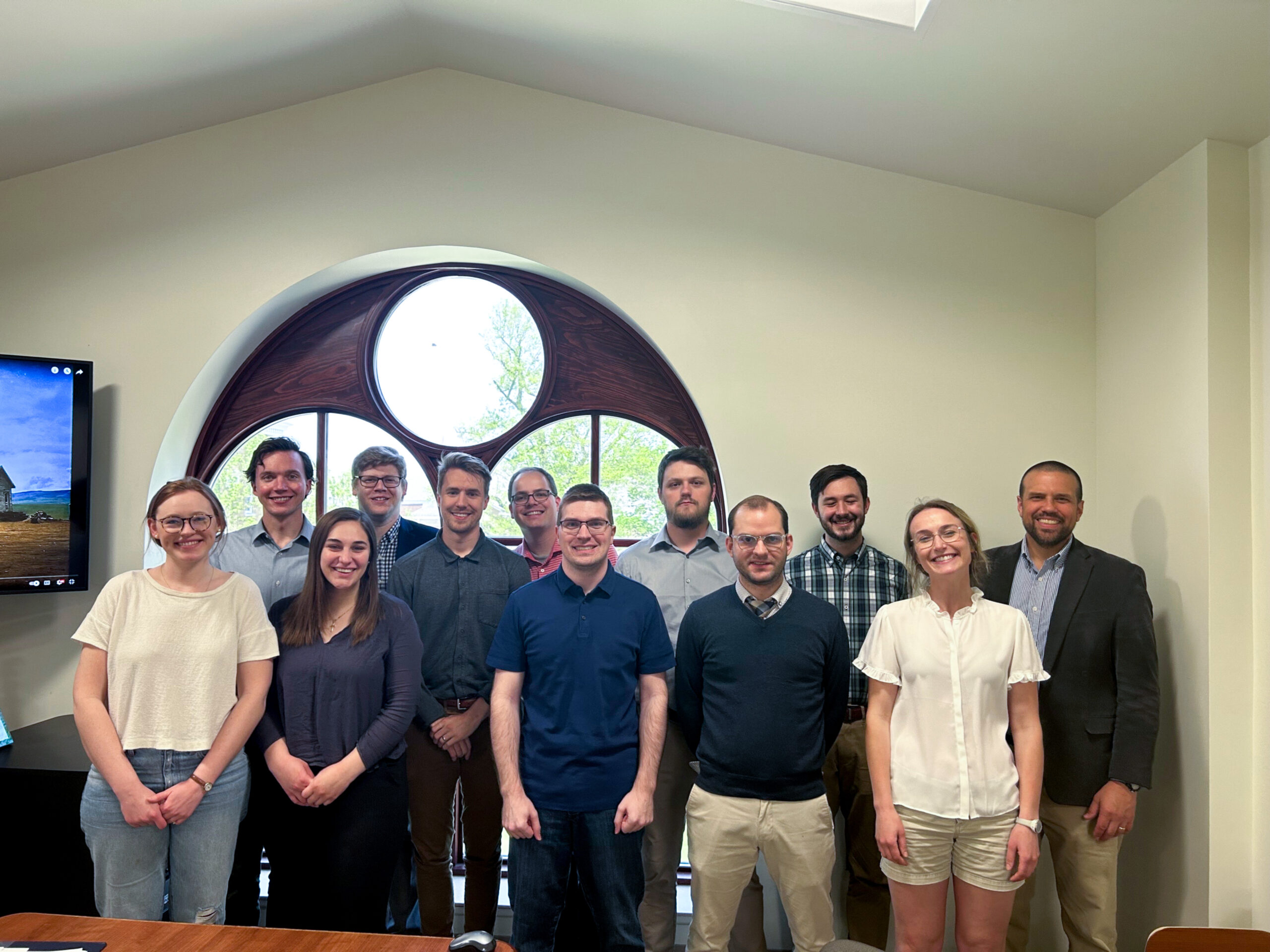
Last fall, 11 students, including eight who attended Hillsdale for undergraduate, made Hillsdale history as part of the inaugural cohort of the Diana Davis Spencer Graduate School of Classical Education.
“I never would have known it was the program’s first year if I hadn’t been told, because everything ran very smoothly. It was a great year,” said Rebecca Willis ’18, who spent four years teaching before returning to Hillsdale to pursue her Master of Arts degree.
Willis had heard rumors of the classical education program for years, and, like many members of the school’s first cohort, learned applications were open by word-of-mouth.
In fact, while visiting friends in Hillsdale, she attended a basketball game and ran into Dean of Master’s in Classical Education Daniel Coupland. He confirmed the school was finally starting up.
Willis attributes her interest in education to her father, who was principal of the Christian school she and her siblings attended.
“I kind of feel like I grew up in school, reading books in the school library until my dad was ready to take us home,” Willis said. “So it feels very homey to me. It feels kind of like an extension of my family.”
Lauren Blunt ’20, another Hillsdale alumna and member of the program’s first class, said the time she spent teaching in the classroom sparked her interest in graduate school.
“I realized there’s a lot that I don’t know about the roots of classical education or why I’m doing a lot of the things that I’m doing,” Blunt said. “I knew that I loved it, but I wanted to know why I loved it.”
Ben Boyle ’20, a fellow member of the program’s first class, said his hands-on experience at a classical school in Austin led him to seek a deeper understanding of the concepts behind his teaching.
“I wanted to have more of a theoretical, philosophical view of what the project of classical education is supposed to look like,” he said.
Several members of the program said they were initially worried about acclimating to the rigor of graduate level work at Hillsdale but found it was well worth the effort.
“I don’t think I’m unique in saying that my love of classical educawtion increased at least tenfold even just in the first few weeks,” Blunt said.
Willis said the difficulty of her coursework didn’t stop her from enjoying it.
“It was such a joy to do that amount of great work, not only because the things we were reading were worthy of my attention, worthy of my study, worthy of my affections, but because the professors were really excellent,” Willis said.
Greg Bradford ’17 said he appreciated the faculty.
“A big thing for me was learning how to read for a graduate class,” said Bradford, another member of the cohort. “I got into a rhythm as the year progressed, and the professors themselves were really helpful in terms of teaching us how to be graduate students.”
Blunt said her professors were an invaluable resource, especially when she was struggling with coursework.
“I think the most fruitful conversations I had with my professors about papers or class or anything else I was thinking happened when I came to them humbly and said, ‘I’m stressed I don’t know what I’m doing.’” Blunt said.
Members of the initial cohort all took the same classes during the first year of the program, which they said led them to develop a strong sense of camaraderie. Classes included, Education in America, History of Liberal Education, Humane Letters, and Philosophy of Education. The future home of the graduate school is still under construction, so they attended seminars on the fourth floor of Kendall Hall.
“It was very much a cooperative endeavor,” Willis said. “For two years, this group of people had to rely on each other intellectually, spiritually, and materially.”
Bradford said the students made an intentional effort to socialize outside the classroom.
“You’re basically doing life together for two years, so it’s good to know each other beyond just, ‘What did you think of the reading?’” Bradford said.
The graduate students said they bonded during last year’s black out when Michael Herringshaw, a student whose power was quickly restored, invited the rest of the cohort to stay at his house. His family offered them food, heat, and running water.
“There was something very humbling about showing up looking disgusting — I hadn’t showered, I hadn’t eaten — and having this friend who I struggled through class with suddenly open up his home,” Blunt said. “It was very human.”
Now that they have entered their second year, the students no longer take the same classes. Their education is tailored to their individual aspirations, whether that be working in policy, administration, or the classroom.
Though they spend less time together, the students said they would advise future cohorts to focus on building relationships.
“Look for opportunities to flesh out the ideas and the abstract concepts that you’re learning in class by spending time with your friends, spending time with professors, and reading,” Willis said.
