
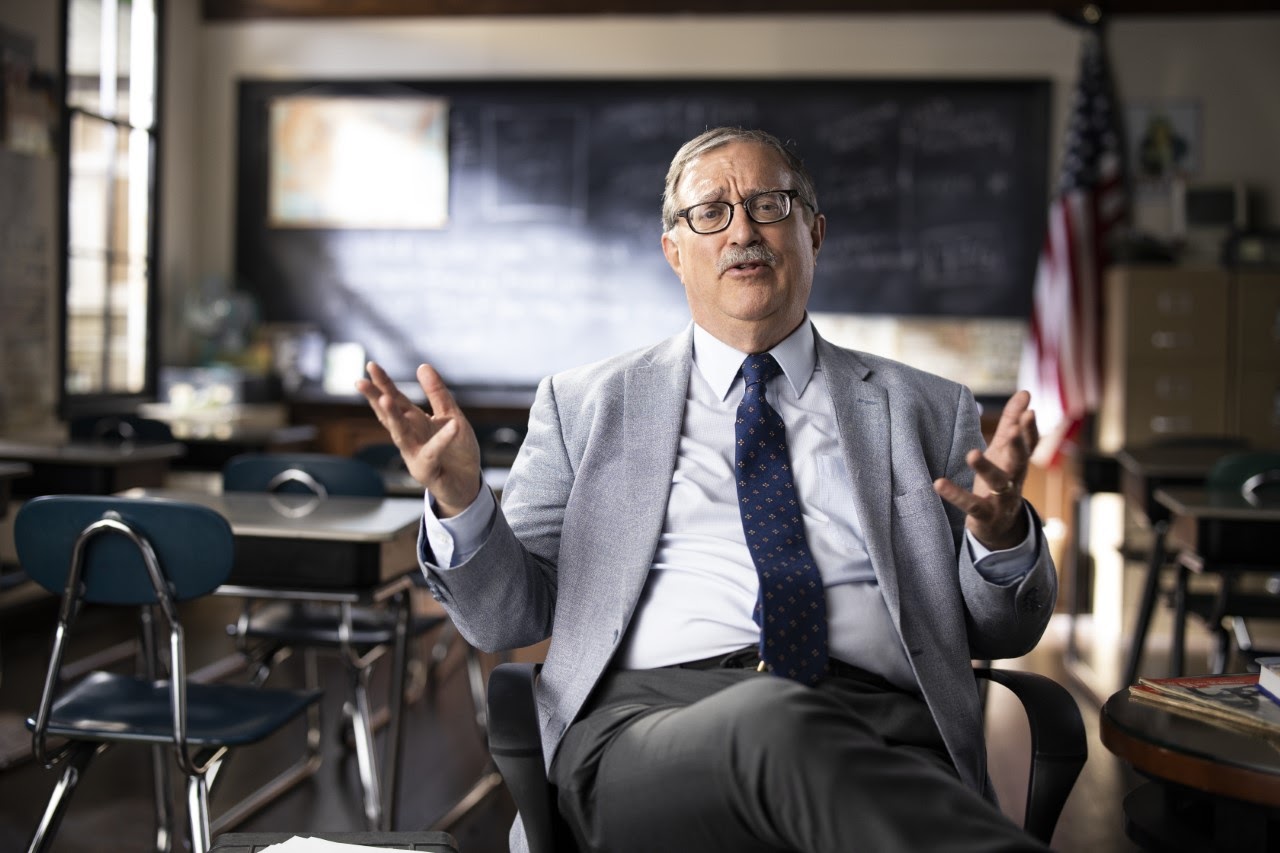
History professor Wilfred McClay published a young reader’s edition of his textbook “Land of Hope: An Invitation to the Great American Story” in August following the success of the first edition, published in 2019.
McClay, Hillsdale’s Victor Davis Hanson chair in classical history and western civilization, said many parents asked if he would write a version of the book with the same material but accessible to a younger audience. In response, he completed a two-volume young reader’s addition of the textbook.
McClay said it is important for citizens, especially young citizens, to understand their country and the underpinnings of the society in which they live.
“The form of patriotism that the United States has brought into being is one of the bright lights of human history, and we should not allow it to be extinguished, either through our inattention to details or through ignorance of our story,” McClay said.
Associate Professor of Politics Adam Carrington said he is excited to educate his children with the book.
“In a republic, every generation must learn self-government through inculcating America’s founding principles,” Carrington said. “This necessary education includes knowing our history. ‘Land of Hope’ tells American history the way it should be told. It shows that we Americans have much about which we should be proud in our past. We also have had to overcome evils, often with great effort.”
Hillsdale graduate student Christopher Goffos said he will use the new edition of “Land of Hope” as an educational tool for his three children.
“I’m delighted to see that Bill McClay — who is not only a compelling storyteller, but a real historian concerned with both genuine facts and serious ideas — is publishing an edition of his book that will be accessible to a younger audience,” Goffos said. “I hope to use it to teach my son the truth about America so that he can confidently love and defend the nation of his birth.”
A proper study of history is beneficial for children, McClay said.
“I think that history lifts us out of an obsession with the present,” McClay said. “We begin to see that things have happened before, that they are not unlike what is happening now, and that we might be able to learn something from the past.
