
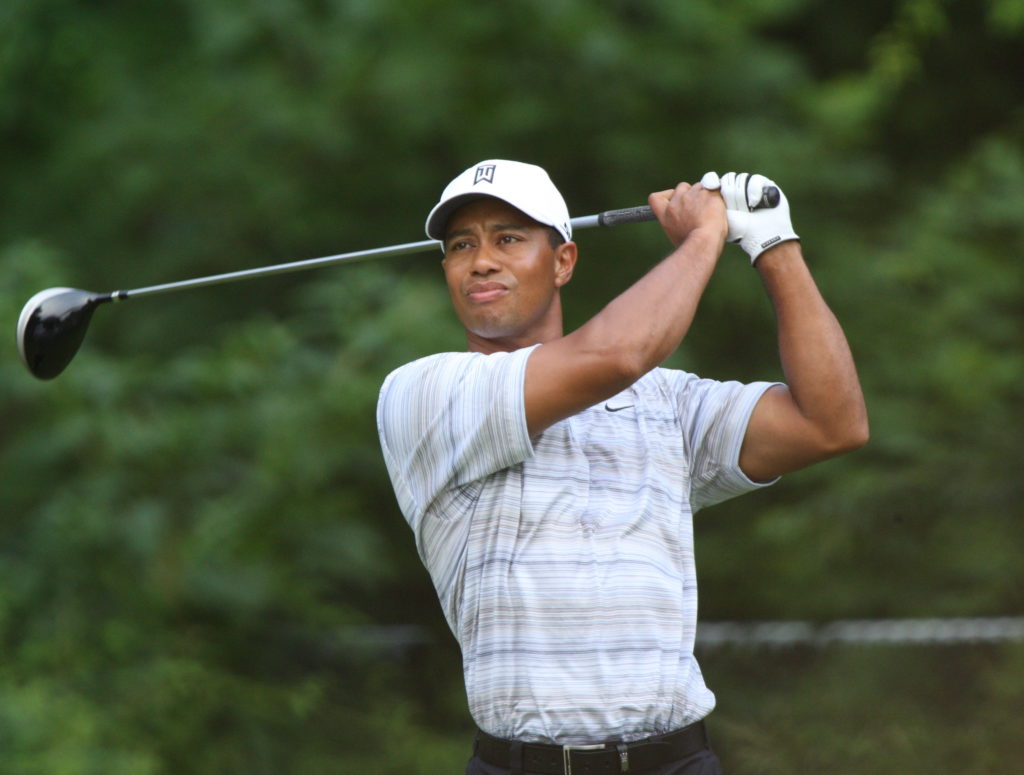
When Tiger Woods rolled into his final putt on Sunday to win his fifth Masters title and 15th major championship, he answered the question that hung over the golf world for a long time: How does Tiger compare to the current generation of great golfers?
It was Woods’ own greatness that gave rise to the generation of golfers he had to defeat to win his first Masters Championship since 2005.
When Woods won his first major title at Augusta National in 1997, Pulitzer-Prize winning sportswriter Dave Anderson of the New York Times proposed dividing golf history into two eras: before-Tiger and after-Tiger. Anderson foresaw that Tiger’s athleticism and suave demeanor, combined with his ability to bring non-white golfers to the game, would create a new golfing landscape. Anderson predicted this even before Tiger won the “Tiger Slam” and held all four major titles at the same time — widely considered the greatest golfing achievement of the modern era.
Tiger himself predicted that his example would breed a new generation of golfers.
“I think more young people will start to play the game,” Woods said. “I think that barrier, where young people haven’t normally pursued golf, I think that now kids will think golf is cool, really. And I think they will start playing it.’’
That new generation of golfers are household names now.
Rory McIlroy, Brooks Koepka, Justin Thomas and Dustin Johnson fit the mold of the “after-Tiger Era” professional golfer. Powerful, athletic, and treated like rockstars, they have nine major championships between them.
Facing this crowd of talented challengers was Woods — now 43-years and four back surgeries old. Before last fall, he hadn’t won in five years. Many doubted, myself included, whether Woods would be able to compete with the new generation in his state of disrepair.
Sunday’s win proves beyond a doubt that Tiger can still compete and win at the highest level with the current generation of top golfers, talented as they are. Some could argue we already knew that. After all, last year Woods led the British Open, finished second in the PGA Championship, and won the Tour Championship.
But until Sunday, I wasn’t convinced. Woods played his best golf since 2012 in last year’s PGA Championship, shooting an impressive 14 under-par, but he still couldn’t beat Brooks Koepka, who has dominated the major championships in a way not seen since Tiger did in the early 2000’s.
Coming into the Masters, Koepka had won three of his last six major championship starts, and coming down the stretch this past Sunday, it was Koepka that Woods had to beat.
Woods did beat Koepka, and proved he deserves to be recognized as one of the best golfers in the world.
Woods silenced the ever-present doubters. These naysayers contended that Woods wouldn’t have been as dominant in his youth if players like Koepka or McIlroy had been around when Woods was winning major championships in bunches.
If Woods can go beat the best players of this generation in his current condition, there is no way any of them could have slowed him down in his prime when his back actually worked and he played more than just the occasional event.
This is not to demean the new generation of golfers, some of whom will undoubtedly be considered the top-ten golfers of all time. Woods is simply on another level.
It’s exactly as Tiger’s frequent competitor and “frenemy,” Phil Mickelson, once said in an interview with Golf Magazine: “There is nobody in the game that I have seen that is remotely close to the level of performance Tiger was in his prime,” Mickelson said. “Mentally, short game, or ball striking, I don’t think anybody matches him in any of those areas. And Tiger put them all together in one to create a career that is mind-boggling in the game of golf.”
Sutton Dunwoodie is a junior studying Political Economy.
