
A common misconception about professors is that they only read books regarding their field of study. It makes sense because they teach it— at least it does to most. Revealing some truth into this shared misunderstanding, a few chemistry professors talked about their favorite genres and books, which might shock some students by how similar the professor’s’ taste are with their own.
Dean of Natural Sciences Christopher VanOrman said he is currently reading “The Language of God: A Scientist Presents Evidence for Belief” by Francis S. Collins. The novel talks about the relationship between Christianity and Evolution.
“It has to do with Bio Logos, which is derived by Francis Collins. It’s a group of people who have a very strong Christian background and believe in God, but also believe in science— both at the same time,” VanOrman said.
A couple weeks ago, VanOrman met and talked with Collins and said he’ll be coming sometime this year and talk about his perspective on creation and evolution. But if he had to choose a favorite book, it would be “The Disappearing Spoon” by Sam Kean. It contains multiple short stories about the periodic table elements, and he uses these stories often in his General Chemistry class.
“When I first started teaching, I read it when it first came out in 2011,” VanOrman said. “It’s just about the elements and how they came about, like the history of the periodic table. It’s a really cool book with some really cool stories.”
Though she does receive some recommendations from VanOrman, Assistant Professor of Chemistry Courtney Meyet enjoys reading what interests her, and it’s usually historical fiction.
“I love things that are about the history of this country. I’m definitely partial of that,” Meyet said. “Feeling connections to my ancestry and pasts interest me.”
Since she’s from California, Meyet takes pleasure in reading John Steinbeck novels, especially since her all-time favorite book is “The Grapes of Wrath”.
“As a Californian, they really capture the feel of California coast-line, the central valley, the central coastal area of California,” Meyet said.
The novel’s alternating chapters and descriptive scene setters are what really drew her into appreciating the book. She believes Steinbeck captures the true essence of California through his writing style— convincing the readers into feeling as if they were in California themselves.
“When you read these chapters, you feel hot, you feel yourself in the dust bowl, you can taste the dust, you almost feel gritty,” Meyet said. “He has such a way with writing, it’s almost a sensory perception as you’re reading through that chapter.”
Related to her historical fiction interest, Meyet also enjoys “In the Garden of Beasts” and “Devil in the White City” by Erik Larson. She briefly summarizes that “In the Garden of Beasts” is about a family whose head of the household serves as an ambassador in pre-WWII Germany and witnesses the rise of the Nazis. Though he writes historical novels, Meyet mentions how Larson’s writing style is similar to that of fiction novels, making it more digestible and pleasurable compared to reading a history book.
“It’s a sobering book,” Meyet said. “Larson’s books are some of the best history books I’ve ever read.”
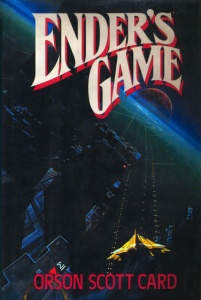
Christopher Hamilton, associate professor of chemistry, enjoys reading science-fiction novels and was influenced from watching television as a child. Currently, he is reading more of the “Ender’s Game” series by Orson Scott Card, and he is intrigued with the diverse perspectives it writes for each book.
“Some of the books go back to ‘Ender’s Game’ and follow Bean telling his story. Then there some that follow right after ‘Ender’s Game’ or have a different timeline, which is kind of cool,” Hamilton said.
Similar to his interest in varying character perspectives, Hamilton used to read a lot of alternative history books. Alternative history is a fiction genre consisting of historical events happening differently. He mentions that the most prolific author in this genre is Harry Turtledove and has read one of the novels from Turtledove’s Southern Victory series, also known as the fan-given name Timeline-191. The series started with Turtledove’s first novel, “How Few Remain”, and continued for more than a decade containing three sub-series within it, accumulating to a total of 11 novels.
“There’s a trilogy of books that describes what happened afterwards, leading into WWI. And now in WWI, you have the U.S. and the Confederate states at war with each other,” Hamilton said. “It’s crazy, but alternative history is fun. It has you think what’s the same, what’s different, and how realistic can it be.”
It’s a common assumption that professors only read books related to their jobs, but they also have varying interests and this is reflected in their choices in reading. While they still read books pertaining to their careers, they also appreciate different styles of writings and meanings out of pure preference.
“I don’t just read things strictly for work,” Meyet said. “Usually if I’m reading it, it’s because I’m interested and I think most of us are that way.”
