
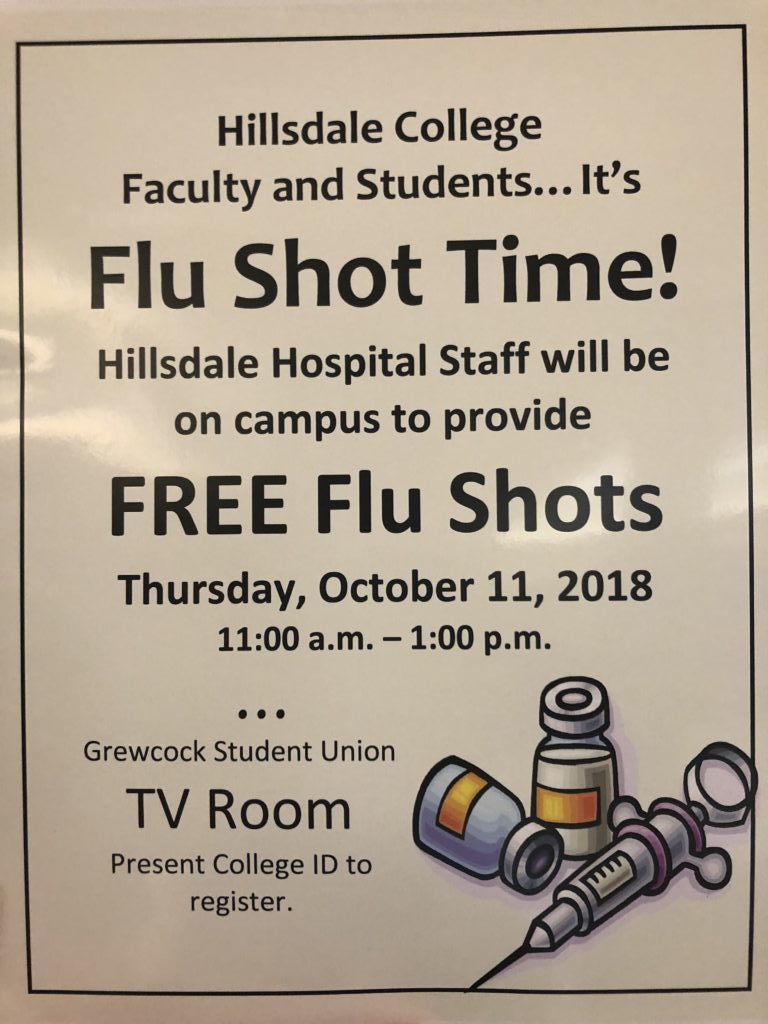
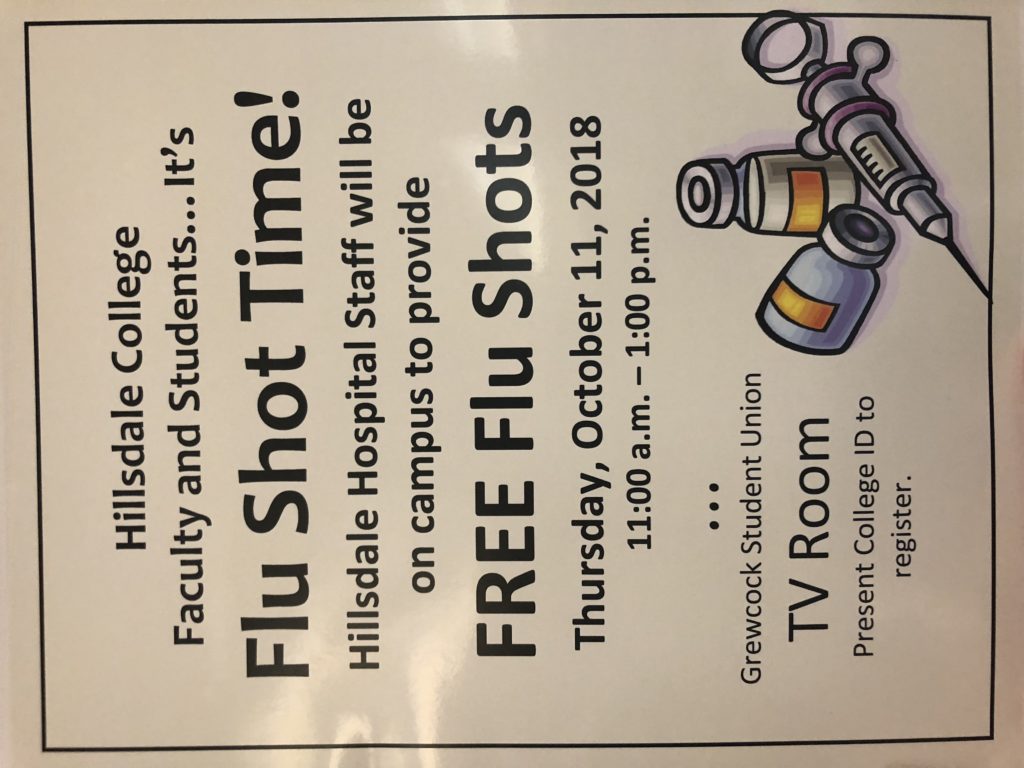
Following a 2017-18 influenza season classified as “high severity” by the Centers for Disease Control, Hillsdale Hospital is hosting a free flu-vaccine clinic in the TV room of Hillsdale College’s Grewcock Student Union this week. The hospital has offered the service annually for about four years.
From 11 a.m. to 1 p.m. on Thursday, five or six nurses will administer approximately 450 influenza vaccine shots, according to Randy Holland, the infection control nurse at Hillsdale Hospital. The clinic will cost the hospital about $7 per shot, not including the expense of the nurses and other staff who will be running the clinic.
But Holland said he hopes the cost of the clinic will be paid off in better public health, although the effectiveness of the vaccine can vary.
“We’re trying to get more in the community vaccinated,” Holland said. “The more that are vaccinated, the better it will be.”
Holland said the number of people taking advantage of the free vaccines at the college’s clinic has risen from around 300 to 450 over the last three or four years.
In Hillsdale County, 1,368 cases of influenza or influenza-like illness have been reported from October 2017 to Aug. 30, 2018, compared with 1,525 cases in the same range the previous year and 724 cases the year before that, according to Yvonne Atwood, director of personal health and disease prevention at the Branch-Hillsdale-St. Joseph Community Health Agency.
If all influenza cases were reported, the numbers would be significantly higher, Atwood said.
Last year’s influenza vaccine was about 38-percent effective, and “not the greatest,” Holland said.
Nationally, the CDC reported a severe flu season: Influenza-like illness reached 7.5 percent last year, the highest percentage since 2009. According to the Michigan Department of Health and Human Services, influenza-like illnesses in Michigan ran above base level for 15 weeks and peaked at 5.9 percent.
The vaccine developed last year targeted the deadliest strain of the flu virus, but didn’t offer the greatest protection against it, contributing to the severity of the flu season, said Assistant Professor Biology Silas Johnson.
According to Johnson, most years, the vaccine provides about 40-60 percent protection. The CDC performs constant yearly surveillance to determine the most common circulating influenza strains, then coordinates with the vaccine manufacturers to match the yearly vaccine to the three or four strains predicted to circulate most widely.
The influenza virus is “a moving target,” making it difficult to develop an effective vaccine, Johnson said. Genetically, one strain of the virus can look very different from another, and the virus has a high mutation rate compared to other viruses.
“Influenza as a virus is constantly evolving,” Johnson said.
Johnson noted that influenza is a respiratory disease — not the “stomach flu” that people often refer to.
Though effectiveness varies, Johnson said his recommendation “is always to get vaccinated” because the benefits for public-health outweigh the potential downsides of getting the vaccine.
The most common side effects of the vaccine — including redness and soreness at the injection site, and sometimes fever or lethargy — are short-term and localized, Johnson said. The benefits, meanwhile, include a reduced risk of catching the flu and a shorter duration of the virus for those who do catch it. Those who get the vaccine are also less likely to pass the virus to someone else.
Holland said he has not seen a reduction in flu cases in the area since the hospital has begun providing more free flu vaccines. But he said he thinks more people are reporting their cases than before.
The vaccine reduces severity and risk to others of catching the virus, Holland said, but he noted that sanitary measures can be just as effective.
“Wash your hands a lot and don’t touch your face,” Holland said.
