
Dear Editor,
Last week, Luke Robson submitted an opinion claiming that television, material reductionism, and “the miasma of science and realism” spawned social pressures on children not to play make-believe or engage in fantasy. These pressures, he alleged, cripple children’s ability to separate fantasy and reality as adults, leading to a delusional generation. However, how he came to this argument is more insightful on delusion than his argument itself.
Apart from television taking time away from children’s make-believe, none of what he is saying is “obvious” enough to be accepted without proof. Rather, given the extraordinary claims and implications of this argument, extraordinary proof is required. Yet Robson offered no arguments, and his only evidences were instances of delusional people existing, social acceptance of transgenderism, and one case where school officials mistook make-believe for a threat. Nothing he offers shows how he came to such a specific and peculiar thesis.
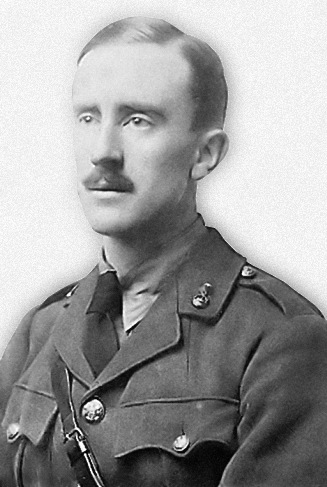
The entire story is told by how Robson ends his article. He ends by quoting Tolkien as saying, “If men were ever in a state in which they did not want to know or could not perceive truth, then Fantasy would languish until they were cured.” Robson’s thesis is the converse of Tolkien’s statement, and thus claims something very different. In all probability, Robson misread Tolkien while the murky idea of “people think fairy tales are for kids because realism” haunted his mind. Filled with the joy of discovery and the false confidence of thinking a great mind had gone before him, he argued that some women want to marry walls because they hadn’t read A Wrinkle in Time as a child, unaware of how bizarre and ill-supported the position was.
This demonstrates a more reliable source of delusions, one that afflicts fantasy lovers and haters alike: not stopping to question yourself. Did Robson ask himself if he read Tolkien correctly, or if he knew the difference between a statement and its converse? Has he thought about what he means by “miasma of science”? Can he explain how not encouraging make-believe would lead to delusions? Did he ever ask himself why nobody appears deluded about the color of the sky or a host of other examples, or how he could talk about the delusions of a society when delusions live in an individual mind?
Not asking such questions, whatever the subject, is a certain way to fall into what Tolkien himself called the perils of fantasy, pitfalls for the unwary and dungeons for the overbold.
Sincerely,
Jonathan Misiewicz
