
Immigration, arguably the issue that won Donald Trump the Republican nomination, is perhaps the area where he is most misguided. Clearly the immigration system is failing, and Trump raises several valid points. His solutions, however, will do more harm than good.
The first issue Trump raises is border security, where there is legitimate cause for concern. Criminals cross into America daily, backlogging our already failing judicial system. Currently, the Department of Homeland Security estimates that immigrants comprise 20 percent of inmates in prisons and jails.
Furthermore, the threat of terrorism grows daily, as terrorists flock to America’s doorstep. There is an entire “smuggling network” dedicated to sneaking terrorists from Middle Eastern countries to the U.S.-Mexican border.
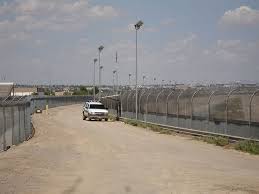
To solve such a crisis, Trump proposes building a wall. But a wall will not work.
There is no clear way to contrive a cost for Trump’s plan – let alone work on steps of implementation – when there is no clear plan to begin with. Trump claims his wall will only cost $8 billion, but considering that there are nearly 2000 miles of border, and that it costs between $3 million and $13 million per mile to build a fence, Trump’s estimation is modest at best. The Washington Post estimates the wall could cost upwards of $25 billion.
In typical Trump fashion, he has back-peddled, flip-flopped, and qualified nearly every element about his wall. It may cover 1000 miles, it may cover 2000. It might be as low as 30 feet tall, or as high as 55. But all we can know is that building a wall will be ineffective.
According to Ruben Andersson, an anthropologist at the London School of Economics, walls “are not solving anything.” He claims,“where there’s a wall, there’s a way.” That is to say, “people who want to cross a border badly enough will find creative ways to circumvent a wall – even if it means taking greater risks by crossing elsewhere.”
Trump supporters are buying into a fantasy if they think that simply building a modern day Great Wall will secure the border. We need to view Trump’s wall for what it is – all talk and no solution.
Trump’s second major claim is that illegal immigrants put an economic burden on American citizens by taking their jobs and reaping the benefits from entitlements.
However, his argument contradicts basic economic principles.
Immigrants actually provide a positive net benefit to the country – even if they are illegal.
Undocumented workers are not “taking our jobs,” despite Trump’s desperate claims to convince Americans otherwise.
This simply is not the case.
The economic law of comparative advantage explains why: as undocumented workers fill more low-skilled positions, native workers are able to specialize in other tasks. As each person specializes in his most productive, economizing position, overall costs are driven down and profits increase.
Consequently, economies develop and flourish. Giovanna Peri, a renowned economist specializing in the economics of illegal immigration, comes to this same finding. Peri asserts that in states with more undocumented workers, native workers made more money and worked more hours. All people have more money to spend on luxuries such as higher education, improved healthcare, and leisure activities. These aspects combined lead to a society better off in the long run, with more jobs available to all.
Further, the Congressional Budget Office analyzed the past two decades of the economic impacts from illegal immigration and concluded that, “in aggregate and over the long term, tax revenues of all types generated by immigrants – both legal and unauthorized – exceed the cost of the services they use.”
The studies, by public and private entities alike, reach similar conclusions: immigrants, even illegal immigrants, provide a net positive economic benefit.
In order to solve his fictional undocumented worker crisis, Trump advocates for mass deportation of approximately 11 million illegal immigrants currently living in America, conducted by a “deportation force.”
The only information known about his mass deportation scheme is that he seeks to create a “deportation force” responsible for rounding up 11 million immigrants and deporting them.
First, the logistics of his plan remain unknown. Like his wall, Trump has qualified just about every aspect of his deportation scheme. Actual implementation of such an absurd proposal would be nearly impossible, not to mention the massive costs that come along with the rounding up and deportation of 11 million people.
His plan sets a dangerous precedent: the only way to properly enforce mass deportation via deportation squads is through invasive policy. If Trump wants this administered effectively, coercion must necessarily occur – there is no other way to deport all 11 million illegal immigrants other than tracking down individuals and searching door-to-door.
The alarms of authoritarianism ought to be ringing loudly in your ears.
Historically, door-to-door searches and seizures are one of the biggest indicators of an oppressive, authoritarian regime.
Hitler’s Germany searched for books, guns, and then people.
Was our own American Revolution not predicated on the police state implemented by Great Britain?
British troops patrolled the streets and sought out revolutionaries, just as any effective deportation force would have to do. The Quartering Act subjected Americans to invasions of privacy, just as a door-to-door task force would do. The Founders did not create the Third Amendment in vain.
This type of authoritarianism is exactly what necessitated the Revolution and thus led to our founding. Trump’s policy does nothing but fly in the face of the American experiment, and it should outrage all who seek to conserve our country.
Hopefully, Trump’s immigration policies are congruent with his other proposals: hot air. He speaks in platitudes and divisive language, yet never proposes any logical and legitimate solutions. His pandering unfortunately appeals to a large portion of the country, simply because it sounds good.
If Trump actually puts his plans into action, illegal immigration will be the least of America’s problems. We must be intellectually honest with ourselves: Trump’s ideas are either sheer nonsense or dangerous to our democracy.
Behr is junior studying economics, politics, and french
